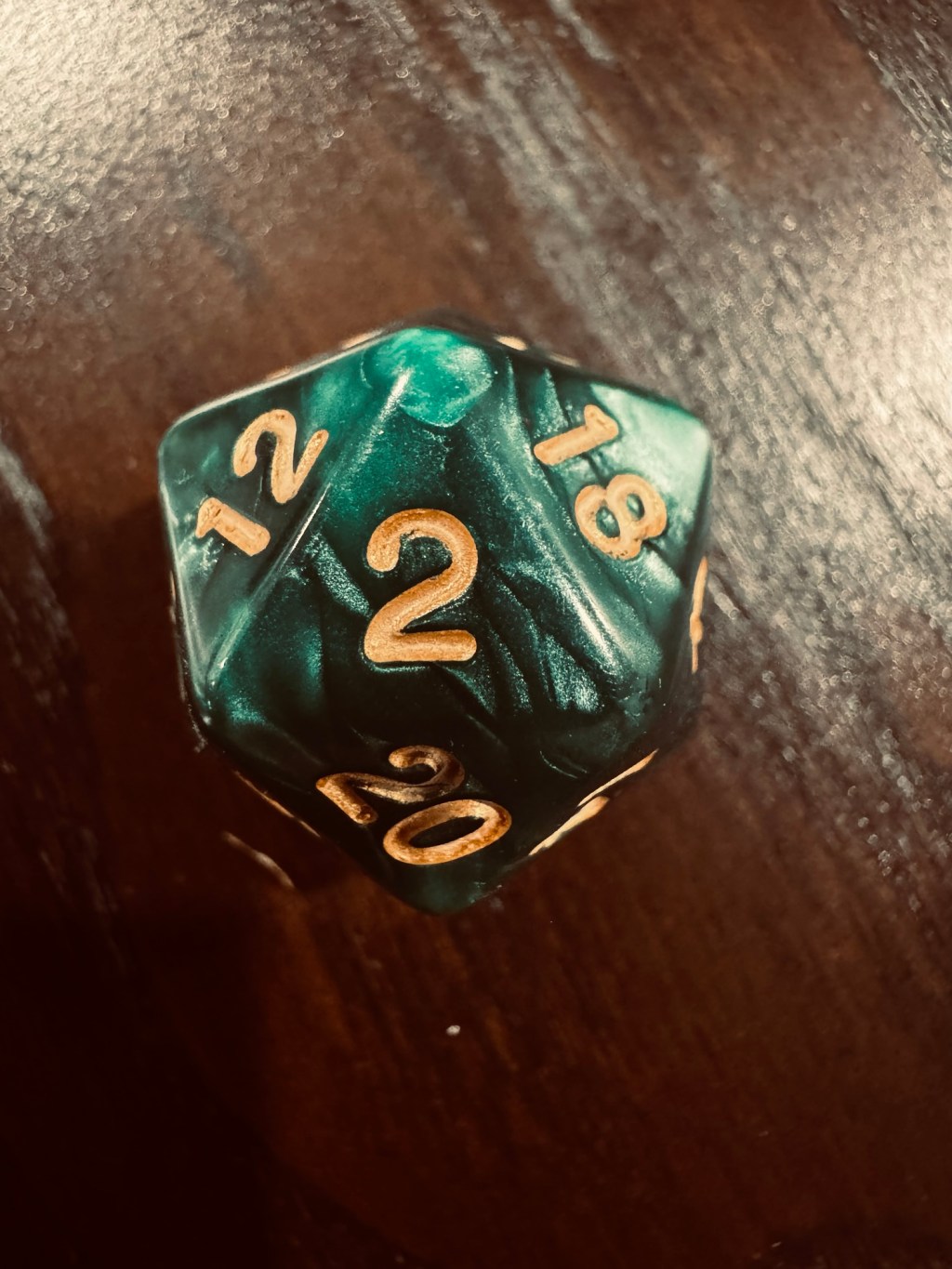
He’d met Harris, Sonny, and Jack at the beginning of Seventh Grade, in the Darwinian nightmare of the middle school boys’ locker room. A hormonal freak of a seventh-grader named Danny Driscoll—who according to legend had been held back two years—along with two of his hulking henchmen, had taken to waylaying Reed on his way from the showers to his locker, when he was clad only in a towel and at his most defenseless. Danny’s two goons would pin Reed’s arms behind his back as Danny stripped Reed naked and mocked his lack of pubic hair and his small, shriveled penis.
By the second week of school, Danny had taken to grabbing Reed’s nipples and twisting them cruelly while speculating about Reed’s mother’s sexual proclivities. Reed, between screams of agony, tearfully resigned himself to his fate: to be tortured and sexually humiliated throughout his remaining one year, eleven months, and two weeks of middle school.
Then one day, a dark blur interrupted Danny’s taunts and sent him sprawling to the ground. It was Harris, who had thrown his small body at Danny with reckless abandon. Harris, clad only in a towel, then stood over Danny, bared his teeth, and snarled, “Fuck off, Danny, we all know you’re only talking about other kids’ moms because yours is in prison.”
Danny, face white and stricken, looked up at Harris, whose slight frame and almost rabbit-like facial features—a twitching, button-like nose, and bushy eyebrows arching over large brown eyes—were offset by the burning anger in his face. Then Sonny and Jack stepped forward, flanking Harris. Sonny, tall and lanky, had his fists balled up at his sides, iron kara slipped over the knuckles of his right hand; Jack’s pinched cheeks and nose were inflamed red with anger, making him look feral and provoked. All three of them had been bullied by Danny, and all were itching for payback.
Danny’s goons let go of Reed, exchanged a glance, and then backed up. They hadn’t signed up for a fair fight. Neither had Danny, who picked himself up off the floor and unconvincingly swore revenge as he limped away.
The four boys began clustering together during gym class, and soon became inseparable—a self-proclaimed gang of misfits whose victory over Danny’s gang became their foundational legend. Sitting by themselves at the most remote corner of the lunchroom, they would commiserate over the slings and arrows of middle school: the cruelty of the teachers and administrators, and the perils of wispily mustached 13-year-olds whose blows against the timid and friendless would echo tinnily against the thin metal lockers that lined the walls of the school. And they all rhapsodized over their romantic ideal, Suzy Jenkins, who they considered the prettiest girl in Seventh Grade, but who they all agreed was totally stuck up.
But more than anything, they talked about Dungeons and Dragons. They would bring in character sheets and sketches of armor and medieval weapons. They would talk about possible adventures—abandoned schooners full of undead pirates; underground barrows crawling with foul demons and the living dead; dragon lairs full of treasure, just waiting to be claimed by the brave adventurer who was willing to confront the fire-breathing wyrm.
The only problem was that none of them had any of the rulebooks—the thick tomes full of magic spells, foul monsters, and heroic deeds that they would need to bring their scattered fantasies to fruition. Reed had asked his parents for a set of the rulebooks for his birthday, but his father, a self-proclaimed “practical man,” disapproved of such nonsense.
So Reed became a boy possessed that semester, mowing lawns and raking leaves around the neighborhood, saving the proceeds for a set of the coveted rulebooks. By Winter-Break, Reed had saved up enough money for the three “core” books—the 1,000-plus pages of rules, statistics, provisos, and corollaries that were necessary to play the game. But after spending his life savings on the three books, he was crestfallen to find that they didn’t include any actual games to play. For that, he would need to shell out yet more money for the “adventures” that, naturally, were sold separately.
Undeterred, Reed began work on what he considered to be the crowning achievement of his twelve years on earth: The Ziggurat of Utmost Evil. He spent months laboring over it, drawing the mazelike levels on graph paper, fiendish deathtraps everywhere—ranging from a simple false floor that would plunge the unwary down onto poisoned spikes, to an elaborate rolling boulder trap triggered by a series of ropes and counterweights, which he meticulously sketched during Mr. Lucido’s first period math class. He flipped through one of the books he’d acquired, a 350-page tome of deadly creatures, picking out the betentacled, the befanged, the venomous, the demonic, and the draconic, to patrol the darkened, musty halls of the Ziggurat.
By the beginning of March, Reed’s magnum opus was complete, and the boys were able to finagle their parents into allowing then to gather at Reed’s house for the first adventure in what they foresaw as a weekly campaign that would persist throughout Middle School, and into the inconceivable future beyond.
But then Reed’s mother ruined everything.
She invited Opie.
#
Opie was the son of Karen, Reed’s mother’s best friend from high school. Reed and Opie had been born a few months apart, and their two mothers often got together for play dates when the two of them were small children. Most of Reed’s memories of Opie were now vague, lost in the primordial haze of Elementary School, but he remembered creating elaborate scenarios with Opie’s vast collection of Lego minifigures.
But then midway through fourth grade, Opie’s father left his family. Karen and Opie had hit hard times and fallen mostly out of touch with Reed and his mother. Reed remembered the one time, near the end of Sixth Grade, when he and his mother paid Opie and Karen a visit at their new home in a small apartment building wedged between a gaudily-lit tattoo parlor on a commercial strip and a gray-slabbed cemetery a few blocks in the other direction. He remembered the smell of the place—not quite a stench, but the odor of stir fries in a small and badly ventilated kitchen. He and Opie’s reunion was stilted, awkward. Opie had barely looked up from his old Lego minifigures when Reed arrived, and continued mumbling dialog to himself as Reed sat stiffly on Opie’s bed and watched. Opie continued to play for the two hours Reed and his mother stayed there and barely looked up from his private game when Reed left.
On the ride home, Reed’s mother turned off the radio. “Did you have a good time with Opie?” she asked.
Reed pressed his cheek against the window and stared at the road in front of them. “Yeah, sure, I guess.”
His mother was silent a moment, then said, “He’s having a tough time. He could use a friend. Maybe you could bike over to see him from time to time.” She paused a moment and frowned. “Actually, maybe you should ask him to come to over to our house.”
Reed grunted noncommittally, then turned the car radio back on to end the conversation.
That was the last he’d seen of Opie until he showed up for their first Dungeons and Dragons session. Reed hadn’t told the other boys Opie was coming, and the other boys—particularly Harris—took an instant dislike to Opie.
It started when the boys went around the table to talk about their characters. As soon as Opie hesitantly said his character’s name, “Noble Barfolomew,” Harris started in on him.
“Noble Barfolomew? What the heck man, this isn’t some Harry Potter Hufflepuff kiddy shit. This is some Game of Thrones shit. Gore. Murder. Titties.” Harris was excited now, his voice rising almost to a shout. “Listen to the other names. Khalsa the Lion, Wild Woodrow, Mayhem. And you’re coming in with some stupid baby joke about puke?”
Opie’s head drooped to his chest, his eyes on the table. “His name’s Noble Barfolomew,” he mumbled. “That’s his name and I’m not changing it.”
The room went silent. Reed felt embarrassed for the other boy and asked Opie to talk a little more about Noble Barfolomew. Opie lit up and chattered on and on about how Noble Barfolomew was the son of a washer woman and the most powerful wizard in all the land. How his father had been kidnapped by an evil demon and that he, Noble Barfolomew, had shown so much promise as a wizard that he had been accepted into the most prestigious wizard academy in all the land. Harris began to loudly drum his fingers on the tabletop, throwing in a theatrical yawn from time to time. But Opie was undeterred and droned on for several more minutes about the powerful wizards who had educated Noble Barfolomew. When he finished his story, Harris gave a sigh and said, “Well now that we’re done with our genealogies, can we go kill some fucking monsters?”
Jack and Sonny laughed and Opie looked chagrined. Reed, feeling the hostility in the air, began the adventure by unleashing a phalanx of goblin archers on his players in an attempt to get them to work together. But despite Reed’s efforts, an air of revulsion and hostility toward Opie persisted all afternoon. Some of it was Opie’s fault, Reed thought: each time Opie had a turn, he took up precious minutes of game time with elaborate descriptions of the spells he was casting, explaining which teacher at his wizard school had taught him each spell, and even making up nonsensical magical incantations.
But that didn’t explain it all. During a break in gameplay, Reed studied Opie’s mangled glasses; his unfashionable and odorous clothes; his obnoxious, braying laugh; the way he flapped his hands around his face as he got excited; and he began to feel the same sense of loathing he could feel emanating from Harris, Jack, and Sonny.
Then he realized: Opie was a reminder. Of all the times they’d taken a random and bruising punch to the solar plexus by some oafish miscreant in the hallway between classes. Of how the girls just rolled their eyes at the boys’ approach at the seventh-grade mixer but would slow dance with a creep like Danny Driscoll. Of when some snickering wag would knock a full lunch tray out of one of their hands as they made their way to the lunch table, and the entire cafeteria would begin applauding.
Reed then understood: Opie was what he and the others all feared they were.
 RayDorl.com
Leave a comment