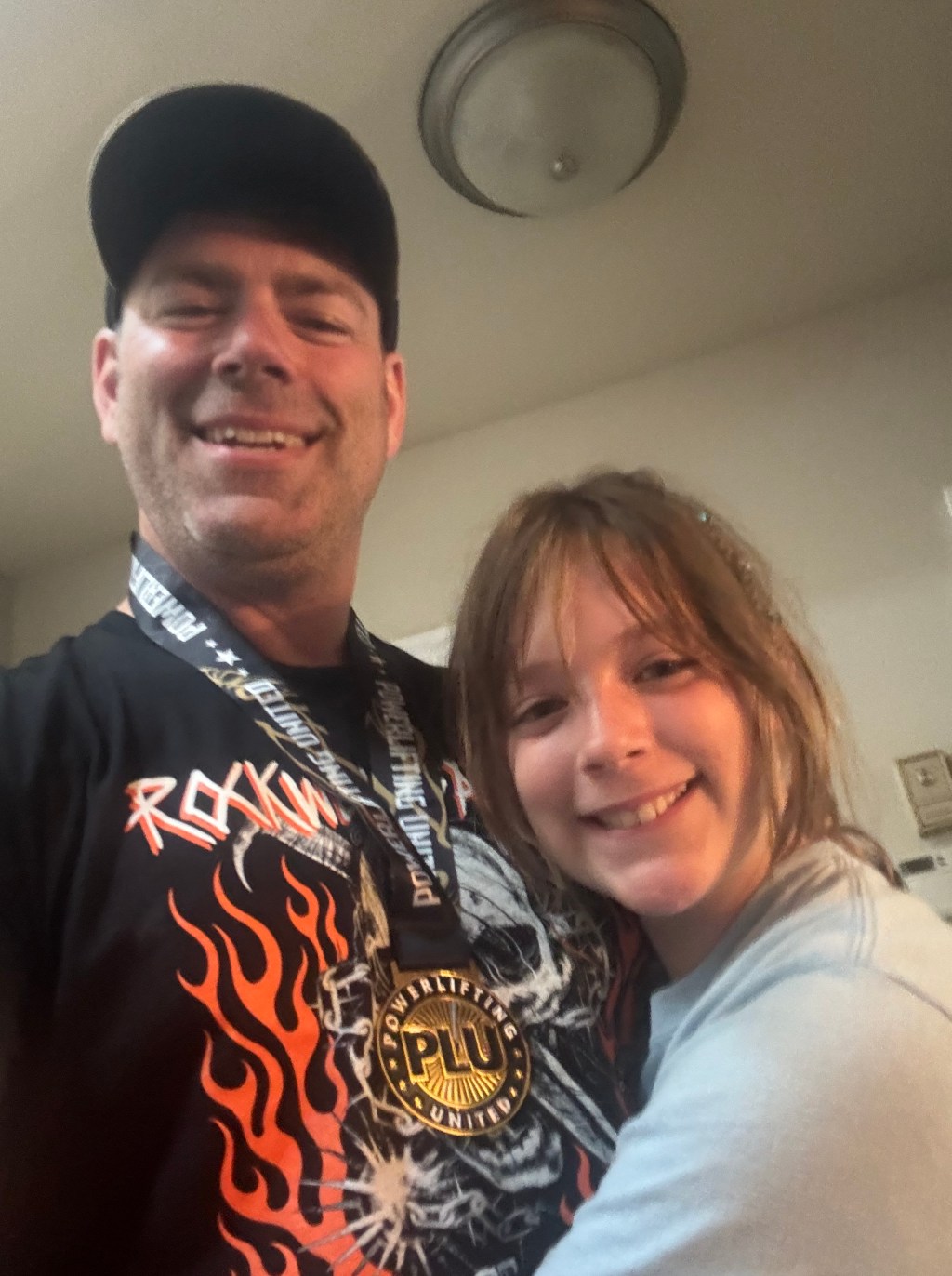
To celebrate my 51st birthday, I signed up for Rockwell Barbell’s annual Midwest Challenge powerlifting meet. TLDR: I had an absolute blast and rediscovered my love of powerlifting as a sport. I was very happy with my meet results as well; I went 9/9 on lifts (the first time I’ve done that in a meet) and my lifts haven’t diminished with age as much as I thought they had–and in fact I set a competition personal record (or PR) at bench press.
(more…)Author: Ray Dorl
-

The Broadview Six Debacle and the Ongoing Collapse of the DOJ’s Reputation
I’m returning to a topic I’ve written about before, the collapsing credibility of the U.S. Attorney’s Office in the Northern District of Illinois, and a broader (and justified) crisis of faith in the entire U.S. Department of Justice that’s developed over the last six months.
(more…) -
The Death of Noble Barfolomew – The Finale (Part 5 of 5)
The game limped on for only a few more sessions after the death of Noble Barfolomew. Harris, Jack, and Sonny simply lost interest, and Reed’s attempts to keep them exploring the Ziggurat of Utmost Evil would degenerate into gossiping about girls or staring into their phones scrolling through social media.
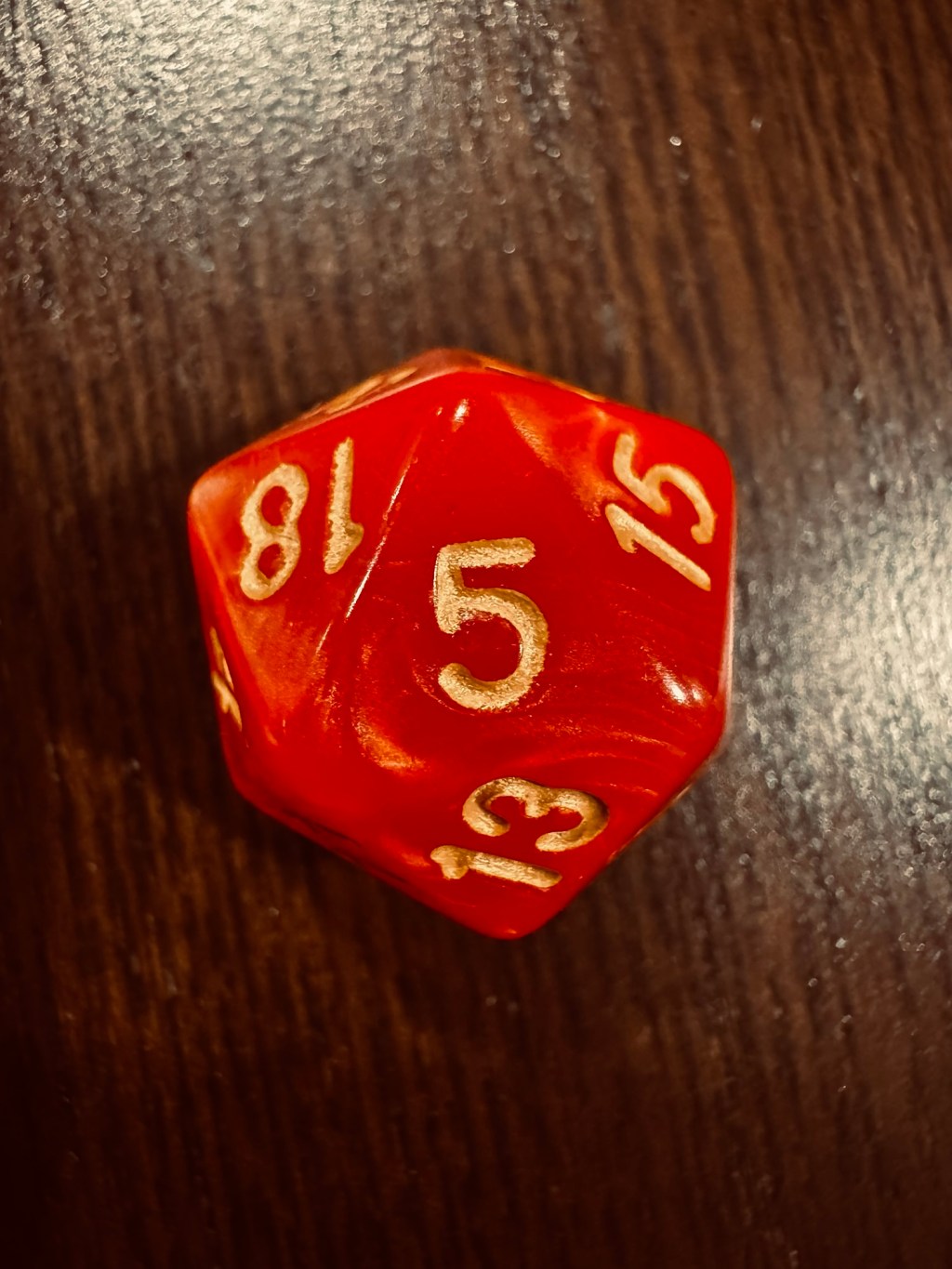
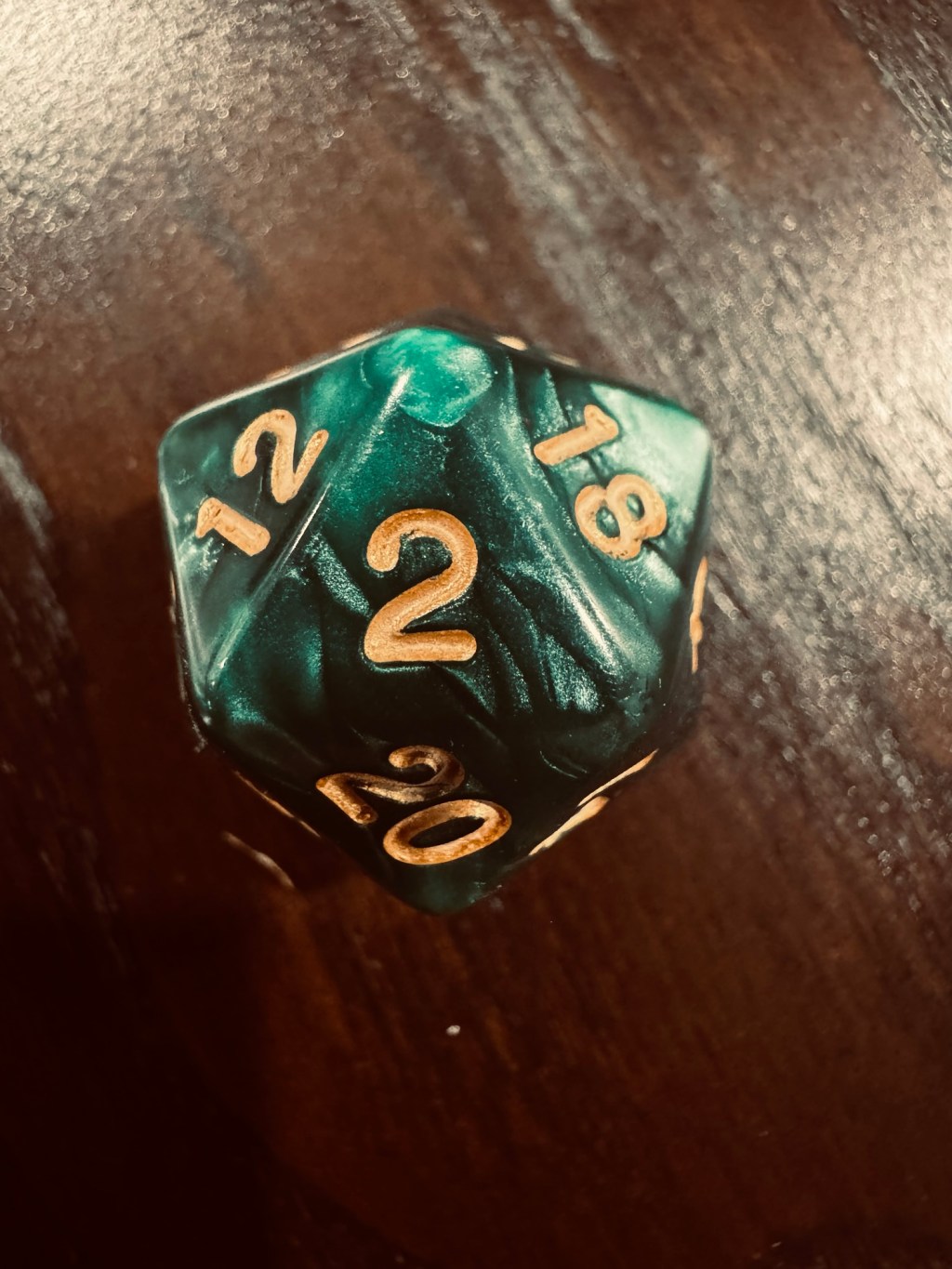
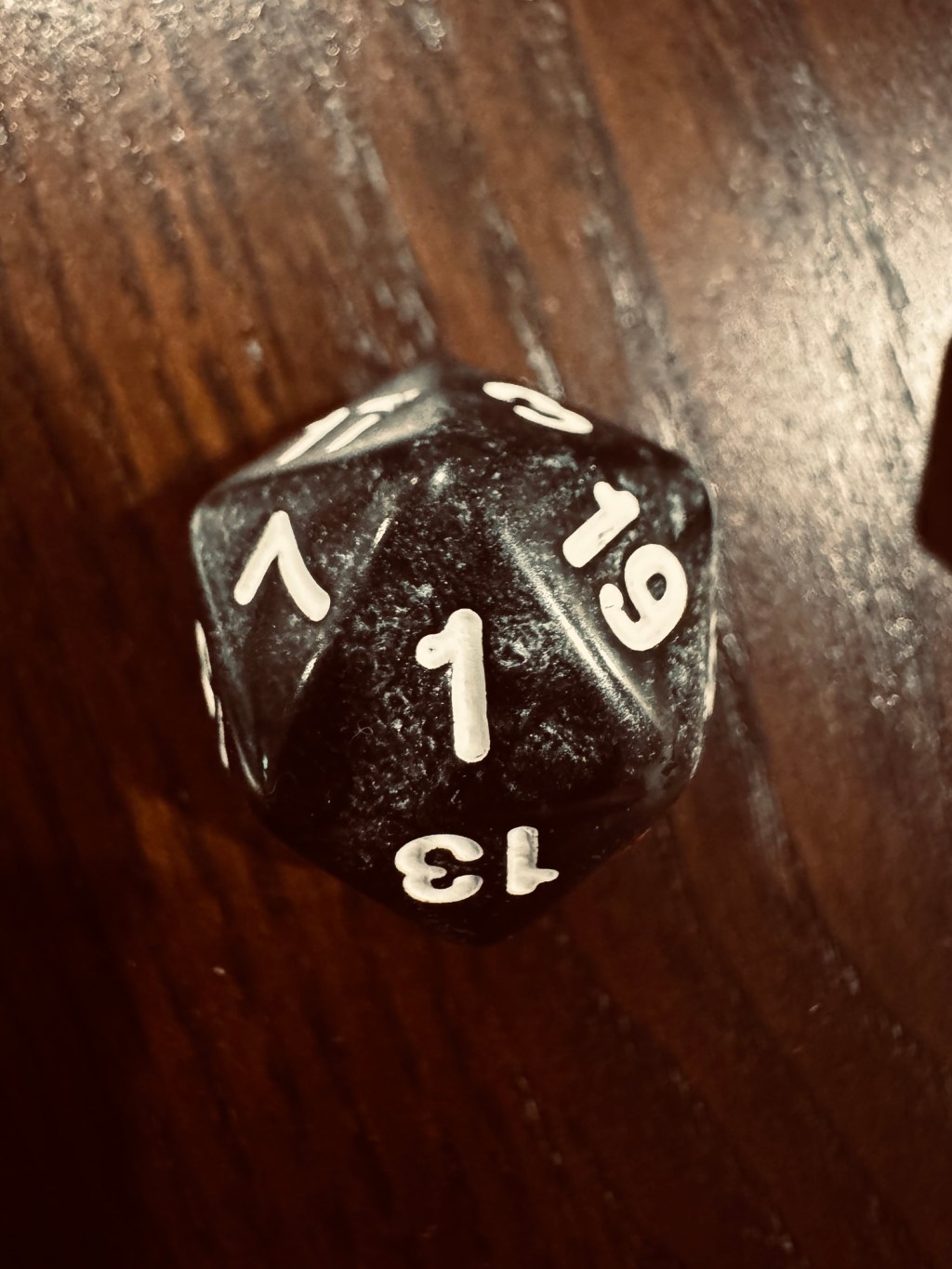
Reed, on the other hand, only grew more preoccupied. At first he remembered his own perfidy with the dice, his abdication of the responsibilities he’d imagined for himself as a just and impartial deity, and Opie’s anguished cries. But soon he pushed those thoughts out of his mind, and began thinking incessantly about those rolls. He saw the face of the dice that he rolled behind the screen over and over, the two and the five inscribed in garish gold and electric blue, swimming in his field of vision. And then he’d envision Opie’s rolls: twenty after twenty, defying probability.
(more…) -
The Death of Noble Barflolomew Part 4 (of 5)
Barfolomew—torch in one hand, his great birch staff in the other—pushed his way through a narrow corridor filled with dusty cobwebs, then emerged into a large room, walls covered with bas-relief frescoes portraying white-clad virgins being torn apart by winged, insectile demons.
Wild Woodrow’s keen senses caught the stench seconds before the others. The unmistakable miasma of decomposing flesh wafted out of the corridor in advance of five undead soldiers that shambled into the antechamber. The group looked on in horror at the putrescent scraps of meat still clinging to their yellowed bones, the glistening viscera falling from their abdomens and trailing behind them, their wickedly curved scimitars flashing in the torchlight.
(more…) -
The Death of Noble Barfolomew Part 3 (of 5)
After the game, Reed appealed to his mother. “Please mom, don’t make us play with Opie again. He’s such a dork.”
His mother sniffed. “First of all, look who’s talking.” She smirked for a moment at her own joke, then continued. “Second of all, if you’re going to play that nonsense, you’ll at least include Opie. His mother says he’s having trouble fitting in at Eisenhour,” the cross-town middle school.
Reed walked away, chastened but undeterred, and the next day he pleaded his case to his father. He figured that his father, who had often voiced his disappointment in Reed’s own awkwardness, would take his side.
(more…) -
The Death of Noble Barfolomew Part 2 (of 5)
He’d met Harris, Sonny, and Jack at the beginning of Seventh Grade, in the Darwinian nightmare of the middle school boys’ locker room. A hormonal freak of a seventh-grader named Danny Driscoll—who according to legend had been held back two years—along with two of his hulking henchmen, had taken to waylaying Reed on his way from the showers to his locker, when he was clad only in a towel and at his most defenseless. Danny’s two goons would pin Reed’s arms behind his back as Danny stripped Reed naked and mocked his lack of pubic hair and his small, shriveled penis.
By the second week of school, Danny had taken to grabbing Reed’s nipples and twisting them cruelly while speculating about Reed’s mother’s sexual proclivities. Reed, between screams of agony, tearfully resigned himself to his fate: to be tortured and sexually humiliated throughout his remaining one year, eleven months, and two weeks of middle school.
(more…) -
The Death of Noble Barfolomew Part 1 (of 5)
Two brave adventurers waited at the treeline of the goblin-infested Misty Marshes, about a quarter mile from the Ziggurat of Utmost Evil. The Ziggurat had been abandoned for untold centuries, after dark magical rituals had plunged its subterranean levels into a dimension of pure evil. Even from this distance, its dark, jagged outline loomed above the bold heroes, unnerving them with its size and palpable, seething enmity.
(more…) -
Dorl Family Trip to Iceland – The Finale
Part 1 Part 2 Part 3 Part 4 Part 5 Part 6 Part 7 Part 8
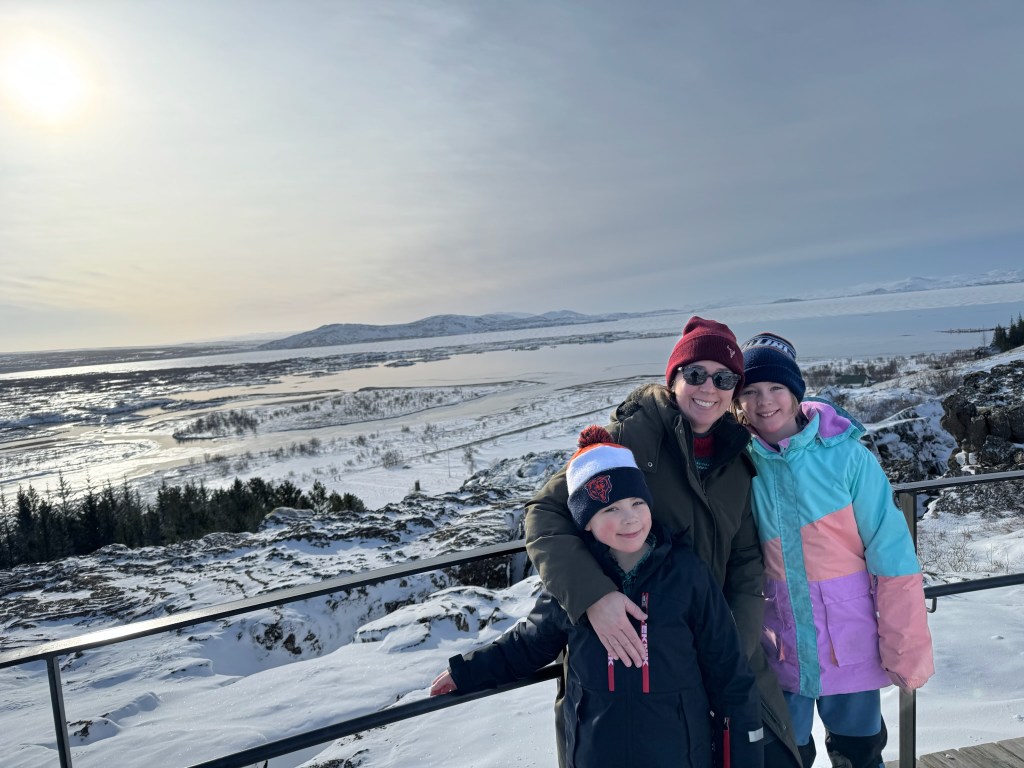
By the time I woke the next day, the storm had broken. Kaye went outside to use the bathroom and when she came back told us it was a beautiful day. I went outside with Gwen, and we were both awestruck by the beauty of the morning—a fresh, pristine layer of snow covered everything, including the mountains that surrounded us, which were bathed in pastel orange and pink light by the rising sun. Both of us spontaneously exclaimed—“Ohhhhh!”—and then were rendered speechless by the beauty (though our camper and the others that had stopped there for the night were half covered in icy precipitation and looked like they’d been through a war).
(more…) -
Dorl Family Trip to Iceland Part 8 (of 9)
Part 1 Part 2 Part 3 Part 4 Part 5 Part 6 Part 7
We woke at 7. I showered, aware that I might not be able to shower the next morning as we’d be staying in the camper, then we all ate a hearty breakfast at the buffet, knowing that we’d be staying in the camper that night and that the next morning we’d be eating the last of our dwindling provisions.
We got the camper loaded and were on the road by 8:45, along the “Golden Circle”, a 180-mile loop that includes some spectacular exhibits of Iceland—the geothermal site Geysir, the waterfall Guilfoss, and Þingvellir National Park, where we would be staying that night. Kaye being the superb planner that she is, of course we had some other stops planned along the way as well.
We reached Geysir, the first of our stops, at 9:45. Prior to this trip, I had never known that the word “geyser” was originally an Icelandic word (and given the tiny population of Iceland, I imagine one of a vanishing few in that language that had caught on), pronounced “Gay-seer,” a pronunciation Kaye had been using all trip with me thinking she was mispronouncing it. Despite our big meal at breakfast, we stopped at a nice coffee shop at the Geysir site for croissants (I proclaimed my chocolate croissant the best I’d ever had) and coffee, plus donuts for the kids. Sadly, they did not have any decaf coffee there, and Billy was denied his third decaf caramel latte of the trip.
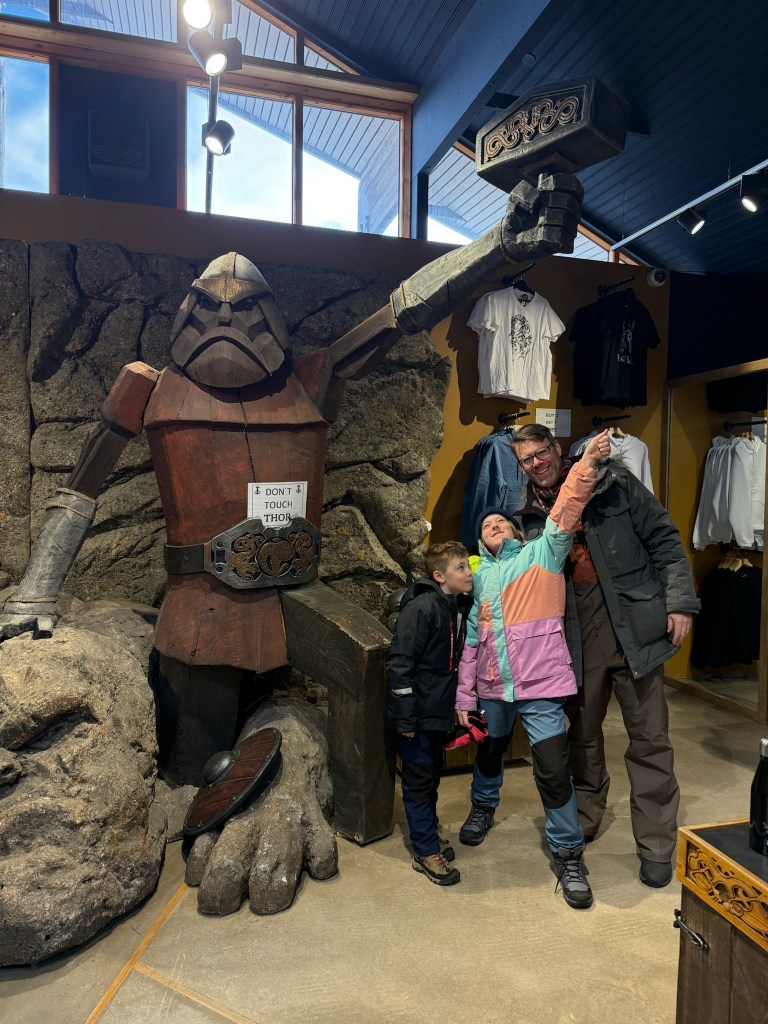
Geysir was clearly a well-touristed location judging from the large number of tour buses that were parked in the parking lot. It also had a veritable shopping mall—including the coffee shop we went to, as well as a large gift shop, an outdoor outfitter store, and a store named “Thor” selling various Viking-themed gifts. The kids (and I) were excited by the wares at this last shop. As we excitedly perused all the merchandise—fake axes and helmets, t-shirts emblazoned with likenesses of Thor and Loki, and other delights—Kaye left us for a moment to get water, warning us not to buy anything. As soon as she was out of sight, Gwen, Billy, and I all gravitated to a rack full of horn-shaped drinking vessels (presumably the type the Vikings used to drink mead) and started excitedly hefting them. But then I noticed that each of them cost more than $100 U.S. dollars; once I told the kids we had to put them down, we couldn’t fit the horns back into the intricately arranged rack so had to leave them askew. Kaye returned just as the three of us were walking away from the display, all of us looking guilty but holding back laughter as Kaye glowered at us with suspicion.
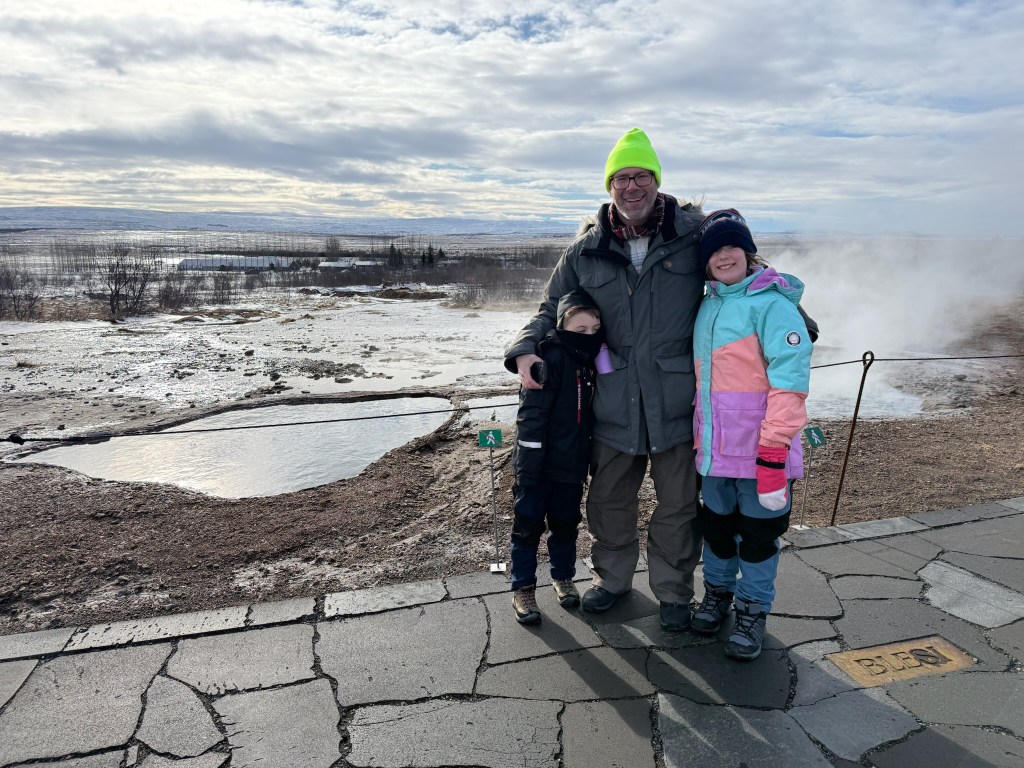
We headed out toward the hot springs and again encountered the sulfurous scent that we’d smelled at Blue Lagoon (and that I was familiar with from Yellowstone National Park). The main walkway was a boardwalk, chained off from the field of geothermal wells, and signs warned visitors to stay on the path, as the water there was between 80 and 100 degrees Celsius (176-212 degrees Fahrenheit). We strolled along a field filled with steam rising from the geothermal displays. Gwen and I trailed Kaye and Billy on our way to the biggest attraction at the park—Strokkur.
Gwen and I were ambling along the boardwalk, enjoying the steam wafting off the marshy landscape, while we talked about different magnitudes of numbers – billions, trillions, quadrillions. Our conversation abruptly ended and we both froze in shock as we saw the main geyser, Strokkur—we had a clear view from our position on the trail—emit a massive spray of steam and water maybe fifty feet into the sky. I stood there dumbstruck for a moment before the spell was broken by Gwen (who clearly wasn’t overawed), asking me, “which is slower, a snail or a turtle?”
We caught up to Billy and Kaye at the designated viewing area for Strokkur. Billy let out a long, exasperated groan when Kaye told him it would be another six to ten minutes until it erupted again. But the time went quickly and soon we all shrieked in delight as another 50-ish foot fountain of vaporized water shot into the air, followed by a smaller eruption bubbling up from the geyser. After that eruption, we continued along the paths at the park, taking in other, smaller geothermal mud pools and geysers. One we passed—Blesi—churned periodically; another—Konunghsver—placidly bubbled away.
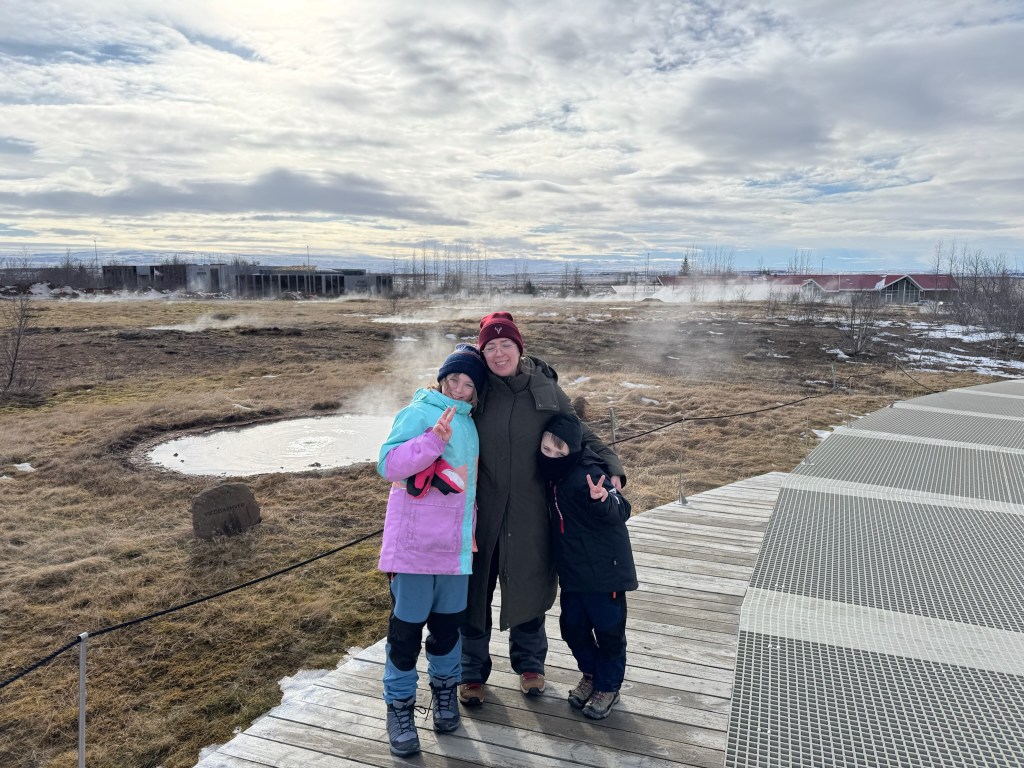
The entire time we were there, bright yellow and orange earthmoving equipment rumbled away, seemingly heedless of the geyser’s explosions. Later I would see a sign showing that they were building additional walking paths and viewpoints at Strokkur. The human activity above ground struck me as paltry in comparison to the deep, subterranean heat that was creating the eruptions we had watched. We returned to the Geysir “mall”—which also seemed slight and paltry after seeing the geysers—to pick up souvenirs, and went on our way to our next stop.
The waterfall Guilfoss was another heavily touristed attraction on the Golden Circle. Despite all the waterfalls we’d seen this trip, Guilfoss truly awed me. It’s fed by the Hvítá river, itself the runoff of a glacier about 25 miles to the North. Guilfoss is a “two stage” waterfall; the first drop is a 36-foot fall, and the second is another 21 feet, with the water emptying into a crevice about 60 feet wide and a mile and a half in length. The signs nearby note that the waterfall consists of about 2800 cubic feet per second during the winter.
But all these statistics and numbers can’t come close to capturing the spectacle of the waterfall. The water came out in scores of torrential downpours among spotless bright white icy caverns. Each of the individual streams was fascinating in its turbulent coursing, and in the aggregate the collection of cascades was almost overwhelming in its breadth.
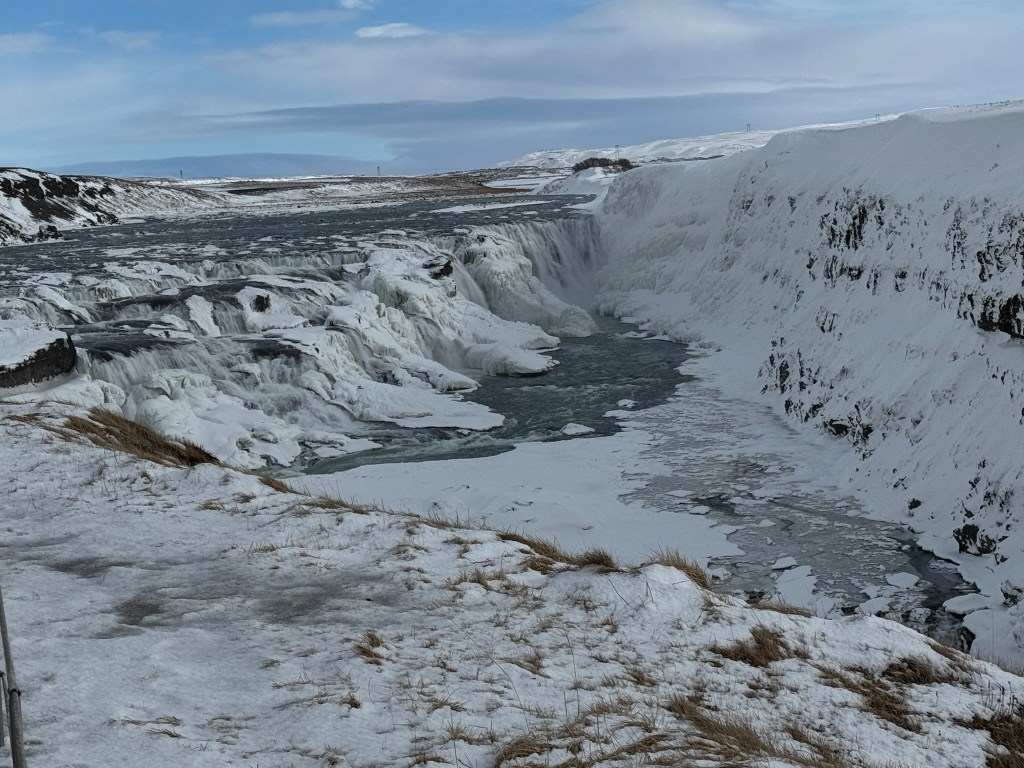
I tried to take in each of the deluges, then tried to broaden my vision to take it all in as a single phenomena, and let my hearing tune into the rush of water and the arctic wind that blew off the pooling water between the “falls.” I closed my eyes as I had at other waterfalls and tried to become one with this wonder of nature, to lose myself in the calming roar, to feel the vapor from the splashing cascade on my face….
Only to be interrupted, as always, by the kids jabbering, and Kaye commenting that she was “all waterfalled-ed out.” But I came to realize, as I had before, that whatever monastic fantasy I have of “becoming one” with the waterfall, or just standing there all day and absorbing the almost unimaginable complexity of the glacial downpour, the purpose and joy my wife and children give me far outstrips the imagined peace that a waterfall—even one of this magnitude—could ever bring me. I turned to Kaye and kissed her, open-mouthed, as the kids looked on and made performative retching noises.
I made one last effort to try to impart the grandeur of Guilfoss to my family: I gathered them all in my arms and told them: “Let’s all be present here. Let’s all just focus on this remarkable, once in a lifetime experience, and let’s all just be silent for 30 seconds and use our senses to take in wonder of this waterfall.”
And of course, the kids were silent for about five seconds before starting to goof off again.
We walked around a little more before getting back on the road, headed to lunch at a working Icelandic cattle farm. On the way, I admired the surrounding mountains shrouded in wispy clouds, a few bare rock facets standing out, lonely amidst a blanket of white snow. The massive Langjokull glacier stood alone amidst the other mountains, majestic and cloaked in white.
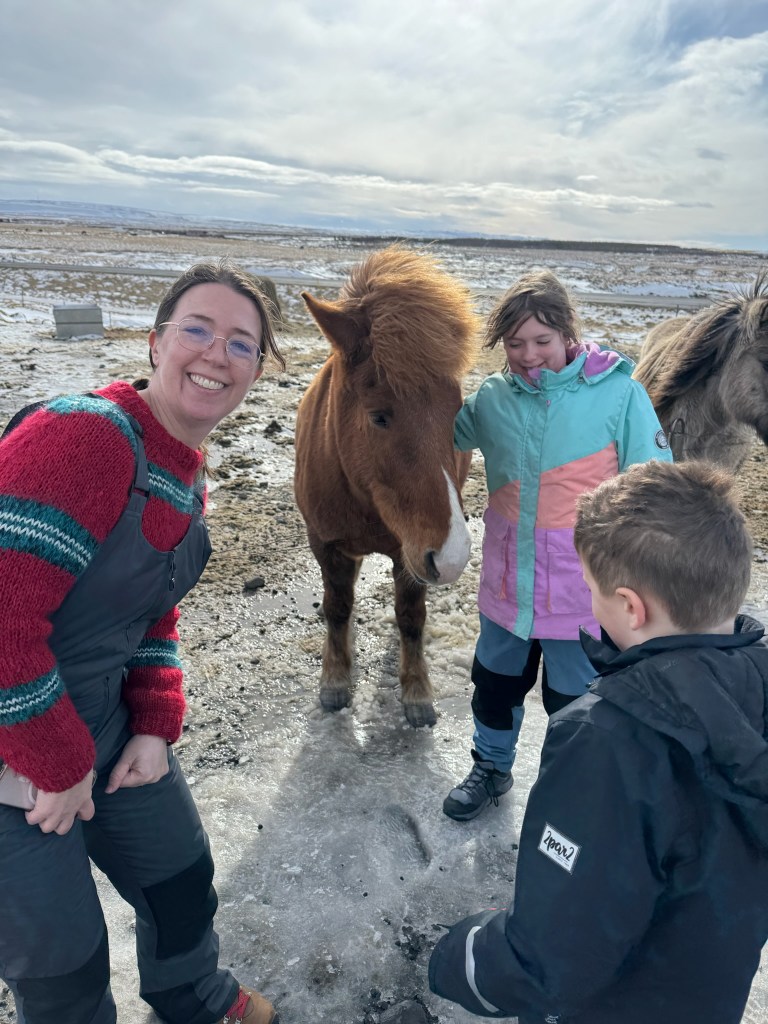
On our drive to our lunch destination, we came across the Bru horse farm, and after seeing so many horses on the side of the road throughout our trip, we were all eager to have a close encounter with some Icelandic horses. We pulled off and found that the farm had three horses tied up for photo ops. Kaye and the kids rushed over to the horses as I deposited 300 Kroner into a box to grab “horse candy,” which Kaye said was “really compressed hay.” I gave the box of horse candy to Kaye, and she let the kids feed the horses. After feeding two pieces of the horse candy to a shaggy brown horse, Billy walked over to a black horse, empty handed, only to have the black horse lick hungrily at his hand. Meanwhile, the brown horse bit Kaye on the hand; Gwen noted “the brown one didn’t bite me because I gave her two treats.” Meanwhile, I tried to win over the black horse; I held my hand out towards its nose, trying to get it used to my scent before I stroked its mane. The horse must have thought I smelled appetizing—he put my whole hand in its mouth, which really tickled, but I achieved my purpose and “Blackie” let me stroke his mane.
We reached Efstidalur farm, our lunch destination. It is a working cattle farm, and as we drove in, we passed farm equipment both traditional—wheelbarrows—and modern—brightly colored yellow and orange tractors and earthmoving equipment. As we parked in a gravel lot, we were met by a host of dogs, and Billy and Gwen were delighted and stooped down to pet them.
We sat down for lunch in a cafeteria area in one of the buildings on the property. I soon noticed that Billy was rubbing his eye, and when he took his hand away I saw that his eye was puffy and red. Kaye immediately diagnosed it as an allergic reaction to Billy touching the dogs outside and, ever prepared, she went back to the car to grab our emergency supply of Benadryl. Billy’s eye quickly got better after he took the medicine, but on our way out we found the pack of dogs lying in wait for us at the exit; Billy shrieked comically and then moved past them with great trepidation.
Plaques around the inside of the dining room traced the farm’s history – it had been in operation since 1681 and was now owned by the seventh generation of the same family. The current generation shared great-great-great grandparents, which made me muse that in a country of 500,000, there must be quite a few distantly related cousins who are married.
After lunch, we all went down to the ice creamery, which looked out onto the pen of cattle that they keep at the farm. I looked at the docile creatures and felt happy that I hadn’t decided on having steak for lunch there, since I almost certainly would’ve been eating a friend of the cows we were looking at now.
We arrived at the geothermal bakery, Laugarvatn Fontana, a little before our 2:30 tour. There were workers and cranes all over the parking lot, working on a new building for the bakery (which was operating out of a small trailer) and an adjoining spa. Kaye remarked about how much construction was going on during our trip and I posited that we were there during prime construction season – after the presumably brutal Icelandic winter, but before the summer and the peak of tourism season.
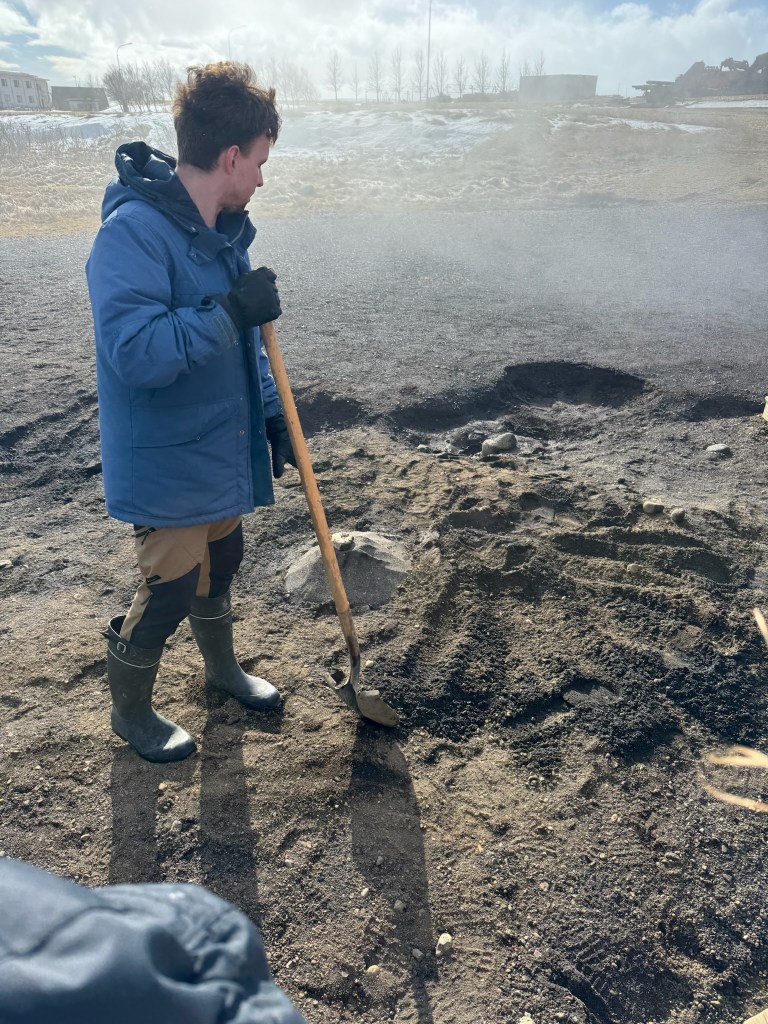
The tour was pretty cool – the guide brought the group (which included some irritatingly loud American tourists) from the office out to the shore of the Laugarvatn lake. The grounds right next to the lake steamed from the geothermal heat below. Amidst a brisk, cold wind, he guided us to a small area dotted with stone-topped mounds; he dug into the steaming earth with a shovel until he got to a pot, which had been submerged in the thermal earth for 24 hours and now held a finished loaf of rye bread that had been baked by the geothermal heat.
He rinsed the pot off in the lake, then brought it and the tour group back to the office, where he distributed slices of the bread adorned with butter and smoked trout (for me and Gwen at least—Billy and Kaye requested that he omit the smoked fish). The bread was delicious: sweet with a nice consistency, and the tour guide gave us all handouts with the recipe, which I vowed to bake once we returned home.
During the presentation, I joked with Billy that I was going to put him in a pot, bury him in geothermic soil, then come get him in a day, at which time he would be a delicious treat for us. Later on, he started talking about digestion, and said something about digesting a human ear, or human thumbs. Kaye was shocked and asked him why on earth he would say something like that, and I was forced to confess to the latest in my questionable “dad jokes.” Then I quipped to the kids that Kaye married me for my sense of humor. The kids are naïve about romance, but even they didn’t believe that.
Despite the strong, cold wind we’d felt coming off the Laugarvatn lake during the bakery tour, it was a clear sunny day—a perfect day for our next stop, the Secret Lagoon geothermal baths. As we approached the Secret Lagoon, Kaye tried to extract a solemn vow from the kids that they wouldn’t act “crazy” at the hot springs. Of course, this was futile and the kids just dissolved into giggles as Kaye asked them to repeat after her, “I, Billy or Gwen, do solemnly swear not to act crazy.”
But the kids were relatively good at the hot springs. The day continued to be sunny and relatively clam—by Iceland standards—and although there was a bit of a chill in the air, it just made the warmth of the geothermal pool even more welcome. Billy at first complained that the bottom of the lagoon—a rocky, somewhat slippery surface—was too deep for him to comfortably stand on, but the lagoon had pool noodles for use by the visitors, and he wound up happily floating about He eventually played a game where he put Kaye and I in “jail” and pretended to feed us disgusting fare like moldy potatoes, poop, and our own vomit; what can I say, the kid is a laff riot (and a seven year old, which often escapes my notice because he’s generally pretty mature for his age). For her part, Gwen donned goggles and repeatedly dove to the bottom of the lagoon (maybe 5 feet in depth) to grab dark, smooth stones that she asked me to hold onto for her.
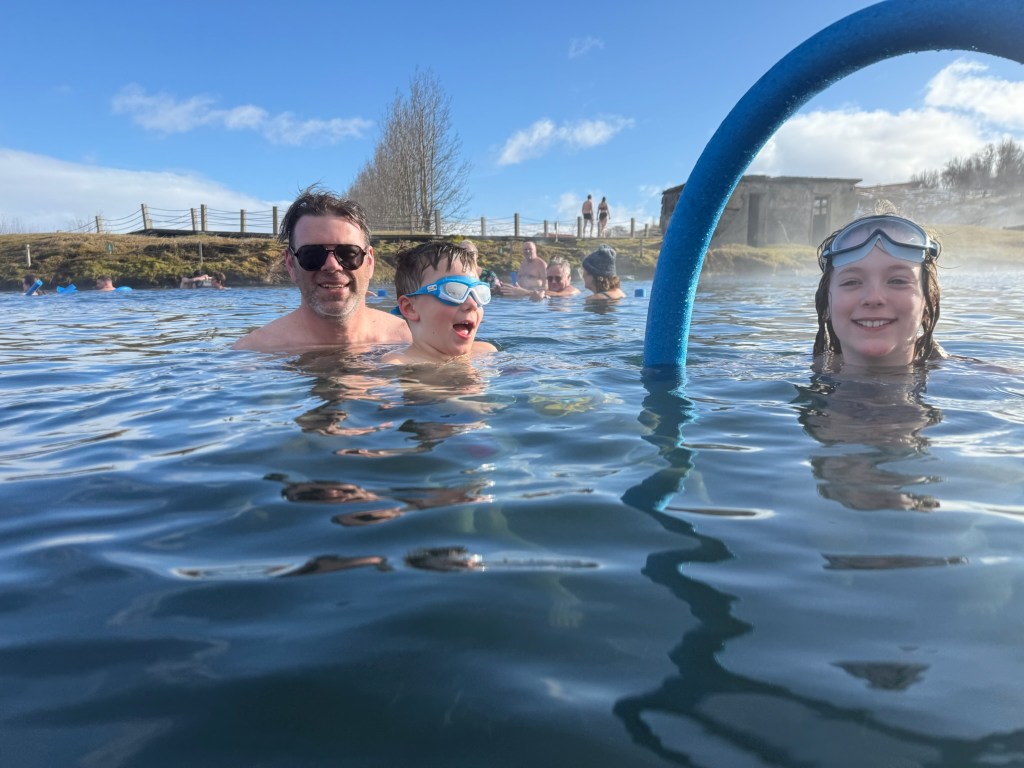
We stayed for about an hour. It was really a pleasant time and both Kaye and I remarked that the Rick Steve’s guidebook—which declared the place overrated and overcrowded (it really wasn’t) – to be totally off base.
We donned our clothes again, got back in the camper van, and drove toward our destination for our last night in Iceland—Thingvellir National Park. Our provisions were low enough that we decided to stop at a small pizza place on the way named Vinastraeti, about a half hour from the Secret Lagoon.
But by the time we got to the restaurant, the weather had turned again. The clear, sunny weather we’d enjoyed at the lagoon had been replaced by ominous gray skies, whipping winds, and horizontally blown icy snow. This was disquieting to say the least, since we were planning on sleeping that night in the camper van. But given the vagaries of Icelandic weather, we went into the restaurant and hoped that things would clear up by the time we were ready to complete our drive to the national park.
We were confronted by a familiar face as we walked into the restaurant—the tour guide from the Fontana geothermal bakery where we’d been just a few hours before. At first, I thought I was mistaken, but Kaye asked him if he worked at Fontana’s and he confirmed that this was his second job. Another waitress at the restaurant overheard us and told us that “if you want to stay around here during the winter,” people often have to work two jobs—presumably because the hours are fewer when it isn’t the peak of the tourist season.
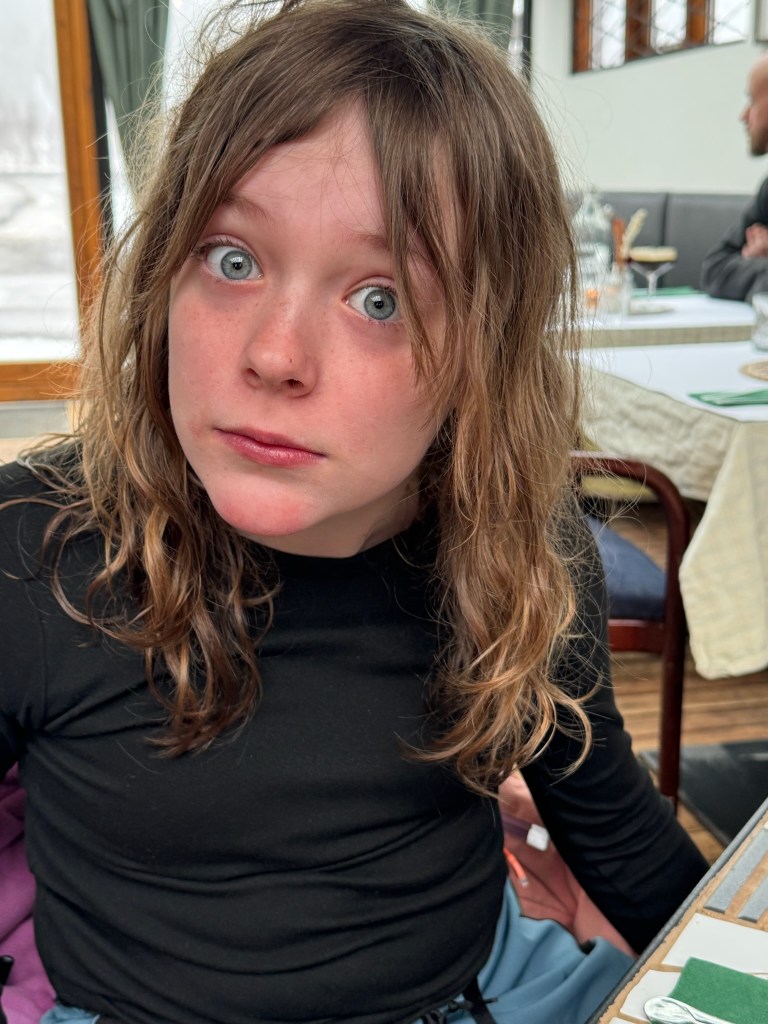
We ordered three pizzas and ate most of them, all of starving after our long day. As usual, we had a fun and silly time at dinner, with the kids taking selfies of themselves with my phone in a “crazy face contest,” and then talking about pitting animals against each other in a “March Mammals Madness.” One matchup we discussed at length was “bats versus whales.”
We also talked about how this would be the last night of our trip. Billy, whose memory is quite keen, recalled that I told the kids before our trip that it would be “a test of family unity,” since we’d be spending a lot of time cooped up together in a car, and sleeping in close quarters without a lot of our usual comforts. I told him that’s what I thought before our trip, and I added that I thought we’d passed this test. We’d had a fun time together, I said, and despite some minor disagreements, I thought we came out of it closer as a family, with a ton of fun and happy memories of our adventures together in Iceland. Everyone at the table agreed with that assessment.
But as we ate, the weather outside only seemed to intensify. By the time we’d paid and left the restaurant, we were in the middle of a whiteout blizzard (though somehow the sun was still visible as a pale disc in the dismal grey skies). The visibility was close to zero, the wind was howling, and Kaye—our indefatigable driver as always—pronounced that the roads were a “sheet of ice.” We grimly stared at a snowplow—a vanishingly rare sight in Iceland—as it plowed the road to little effect, and didn’t leave any salt or sand in its wake. Then we had a grim laugh as we watched a convoy of pickup trucks laden with All Terrain Vehicles emerge from the icy haze of the evening.
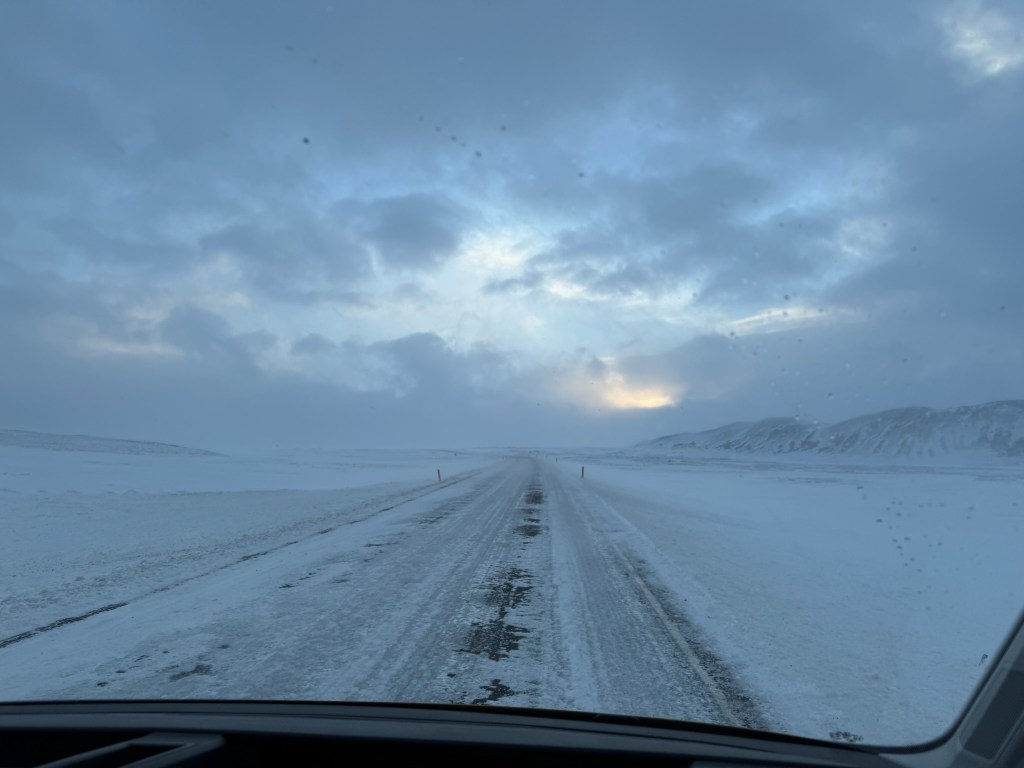
But through it all, Kaye maintained her usual nerves of steel and got us safely to Thingvellir National Park at 7:40. The wind was howling by now, pelting us with piercing shards of ice as we opened up the camper van to switch it to “sleeping mode.” We all went to the bathroom; as Kaye finished up, I led the kids back to the van in darkness and whiteout haze and briefly took a wrong turn before being corrected by Gwen. I grimaced as the wind howled against us and icy particles crashed stinging into my face, and I thought again how dangerous these weather conditions could be; with the limited visibility and high winds, a wrong turn could wind up being fatal.
We all took refuge in the camper van, which was now rocking in the high winds. We’d originally told the kids that it would be “lights out” and time for bed once they brushed their teeth, but they clamored for one “last party” before we settled in for the night. So we all watched “Cheaper by the Dozen” for the second time in two days (though it was hard to believe that we’d viewed it just the day before, when we’d been safely ensconced in a warm hotel room rather than in a camper van being buffeted by high winds), then we all settled in for the night.
And it was the coldest night of the trip. The camper van’s propane heating system had kept us warm and dry throughout the entire vacation, but these winds—sufficient to blow the van so hard that at times I was worried it might tip over—pierced through the small gaps in the van doors. I was chilly and slept poorly that night.
-
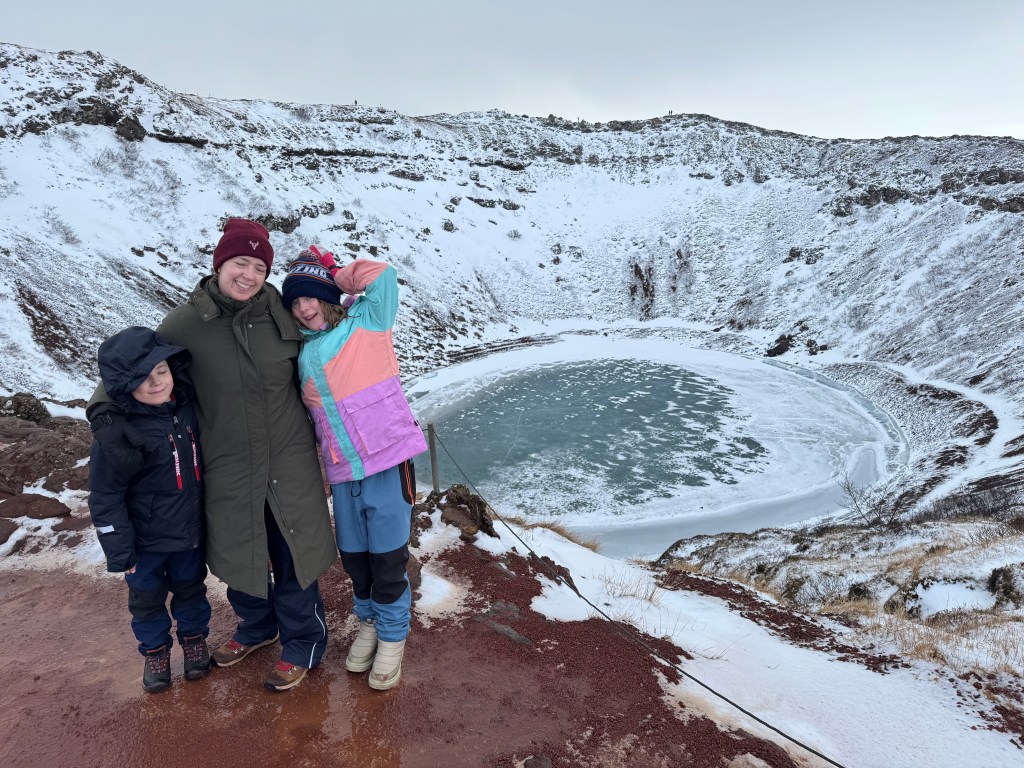
Dorl Family Trip to Iceland Part 7 (of 9)
Part 1 Part 2 Part 3 Part 4 Part 5 Part 6
Billy turned out to be a good bedmate and I slept soundly that night. At one point in the middle of the night, though, I awoke and found him sleeping across the bed, his legs dangling horizontally off one side, and I roused him enough to get him sleeping vertically again. I later gathered that Kaye and Gwen didn’t get along so well—Gwen is a notoriously “active” sleeper, often rotating her body around 180 degrees over the course of the night, which is the main reason that I usually wind up sleeping with her, and Kaye with Billy (the other reason being that Gwen is a major “daddy’s girl”).
(more…)
 RayDorl.com