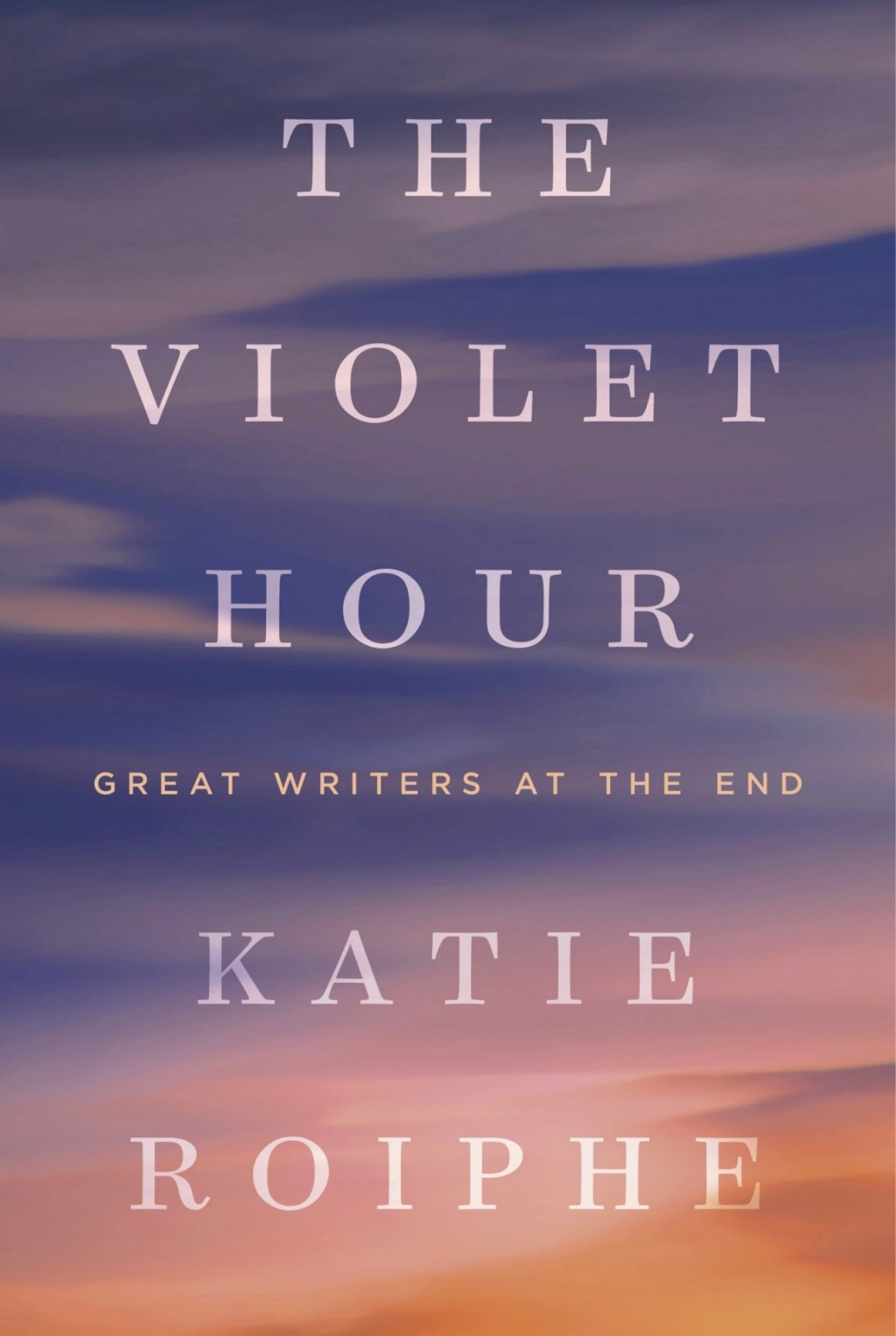
This one hit me hard – I read it just a few months after my mother’s death, as I was trying to make sense of it all. It’s truly meditation on death, with Roiphe profiling the last days of a small group of great writers and thinkers: John Updike, Susan Sontag, Dylan Thomas, Sigmund Freud, and Maurice Sendak (with some “bonus material” involving James Salter, who Roiphe interviewed during the writing of this book immediately before his death).
Roiphe gives sort of a mission statement near the beginning of the book:
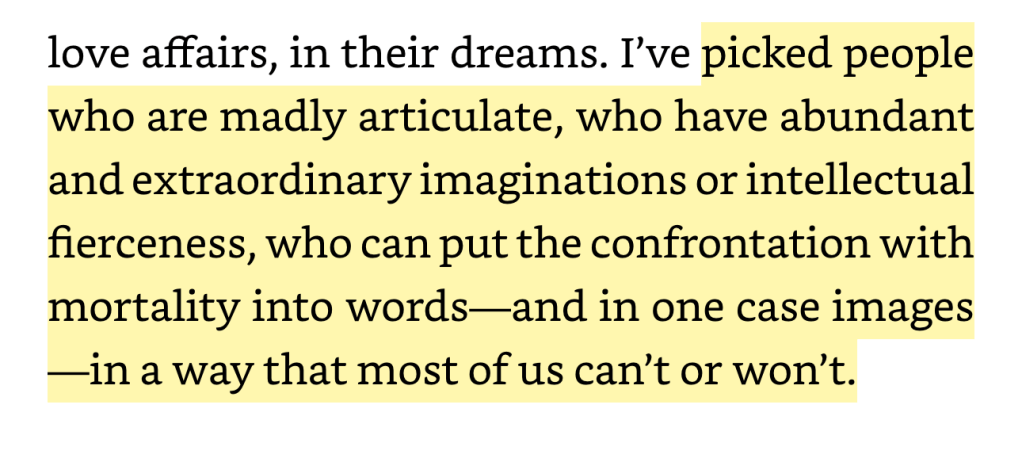
The book was not what I expected, but I mean that in the best possible way. I expected a rather staid, chronological account of the subjects’ last days. But Roiphe enlivens things by jumping around the subjects’ lives and works, drawing connections between their deaths and how they lived their lives–both internally (in their thoughts, emotions, and creative works)and externally (in how they treated the people around them).
I found Susan Sontag’s story the most affecting. Sontag had survived two previous bouts with cancer when she was diagnosed with a third case that would ultimately be fatal. Roiphe traces Sontag’s final days in brutal detail – Sontag never gave up, fought until the last despite her oncologist telling her it was futile and she’d be better off living the final six months of her life in relative good health. Instead, Sontag pursues every possible treatment, including a harrowing bone marroww transplant. And Roiphe pulls no punches, describing how debilitating and hellish that procedure is.
That part struck a chord with me personally. My mother passed away last February, and like Sontag, she did not go quietly. Even when her doctors (and I) urged her to cease third-line treatments of dubious efficacy and debilitating side effects, she clung to those treatments, refusing to give up on the hope they would turn things around. She suffered terribly, and as I read this book, I couldn’t help but see her parallels with Sontag, who similarly explored every long-shot medical treatment available in her attempt to prolong her life, including the aforementioned bone marrow transplant, after which Sontag could barely be said to be “living,” except for the fact she suffered so intensely.
Still, though, Sontag clung to life until the every end. I couldn’t help but relate to one anecdote about her son, David, faithful until the end, who supported her medical interventions even after it became very clear that they were futile and entailed only meaningless suffering. Roiphe writes about Sontag trying to swallow pills (again, of very dubious medical value) despite thrush making it very painful to do so, and quotes Sontag’s son as saying, “I do not regret trying to get her to swallow those pills even when her death was near, for I haven’t the slightest doubt that had she been able to make her wishes known, my mother would have said she wanted to fight for her life to the very end.” I personally have the same certitude that my mother wanted to fight until she was unable to do so.
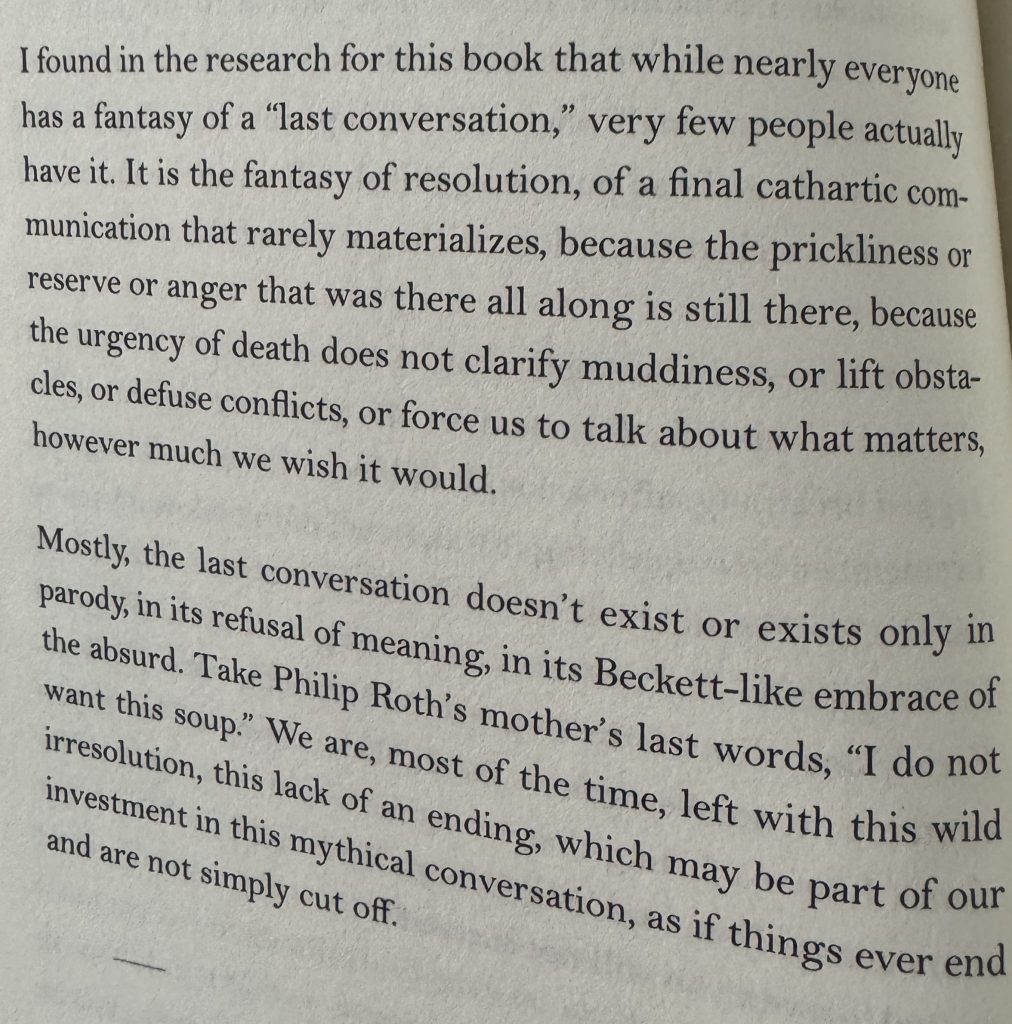
Also, having lived through the deaths of both parents, I was moved by Roiphe’s exploration of the myth of a “last conversation” with a loved one. She returns to this idea several times over the course of the book, but probably discusses it most poignantly in this passage:
Roiphe, having immersed herself in the dying days of these great writers and thinkers, tries to sum it all up. There isn’t much consolation in her observations:
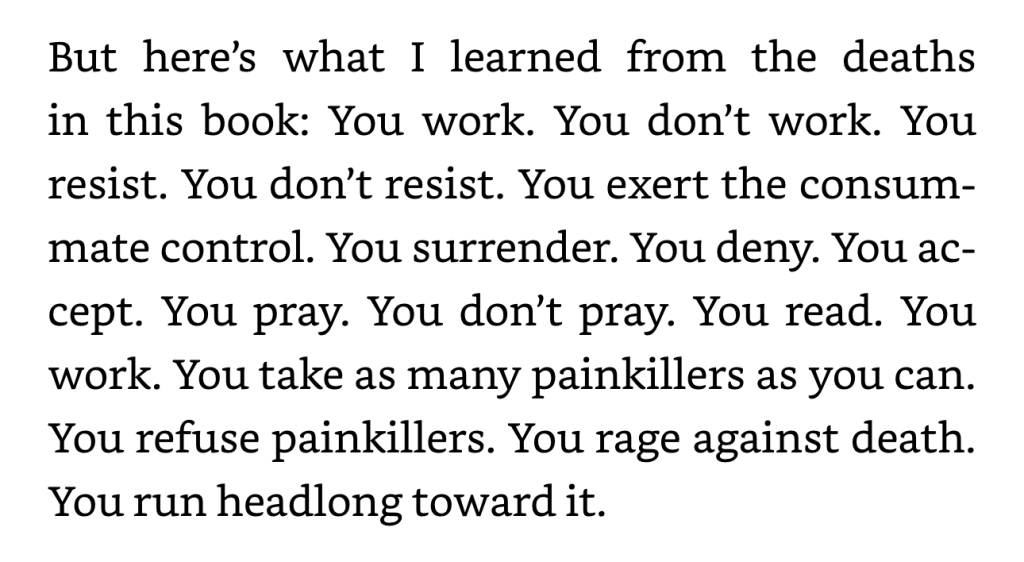
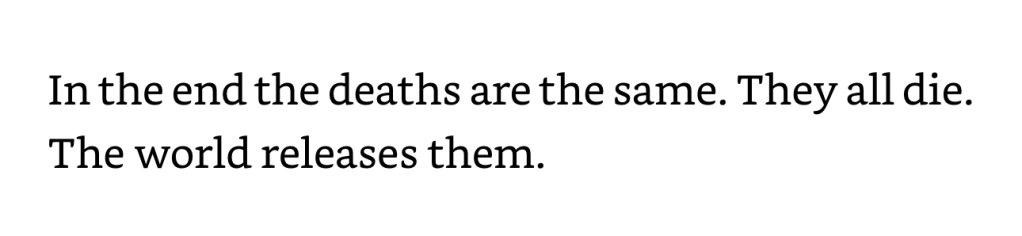
A fair assessment, I suppose, but I feel like Roiphe resorts to sort of a truism: an overwritten version of Shakespeare’s famous line about “death and taxes.”
I suppose my takeaway from this book is that all of the subjects in this book died as they lived. Sontag, a furious force of nature, was unwilling to let go until the bitter end. The logorrheic Updike scribbled poems until his last breath. Freud refused to take painkillers despite the pain of his cancer so he could continue his cool-headed analysis until the last. Dylan Thomas ignored physical pain to continue his self-destructive binge drinking.
Maybe that’s the same for everyone. However we live–whether it be angry or at peace, contemplative or blindly stubborn–we will exit in the same manner.
Overall this is an excellent book if you’re a fan of any of the writers profiled in it, or if you’ve lost someone recently, or if you want something to put the minor difficulties in your life into perspective. It will also make you truly reflect on your values and upon the legacy you want to leave when you meet your inevitable end. Definitely an existentialist classic in its own way.
 RayDorl.com
Leave a comment