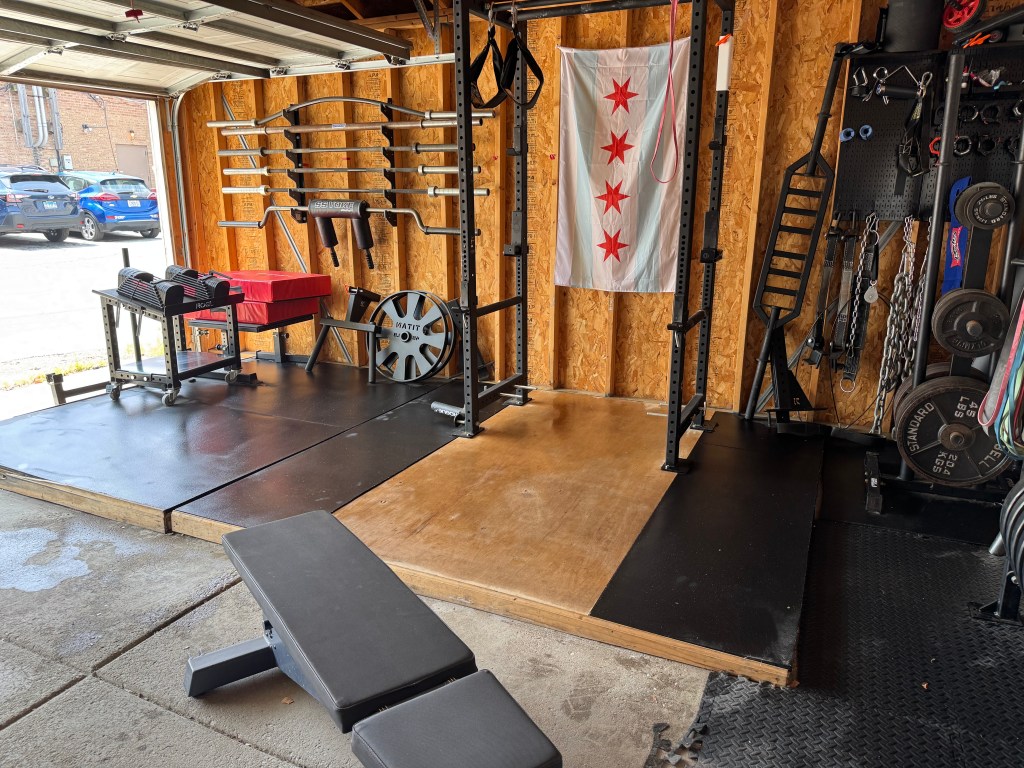
If you recall, at the end of my last post about assembling my platform, I left you off with a cliffhanger: WHAT IS UNDER THAT TARP????
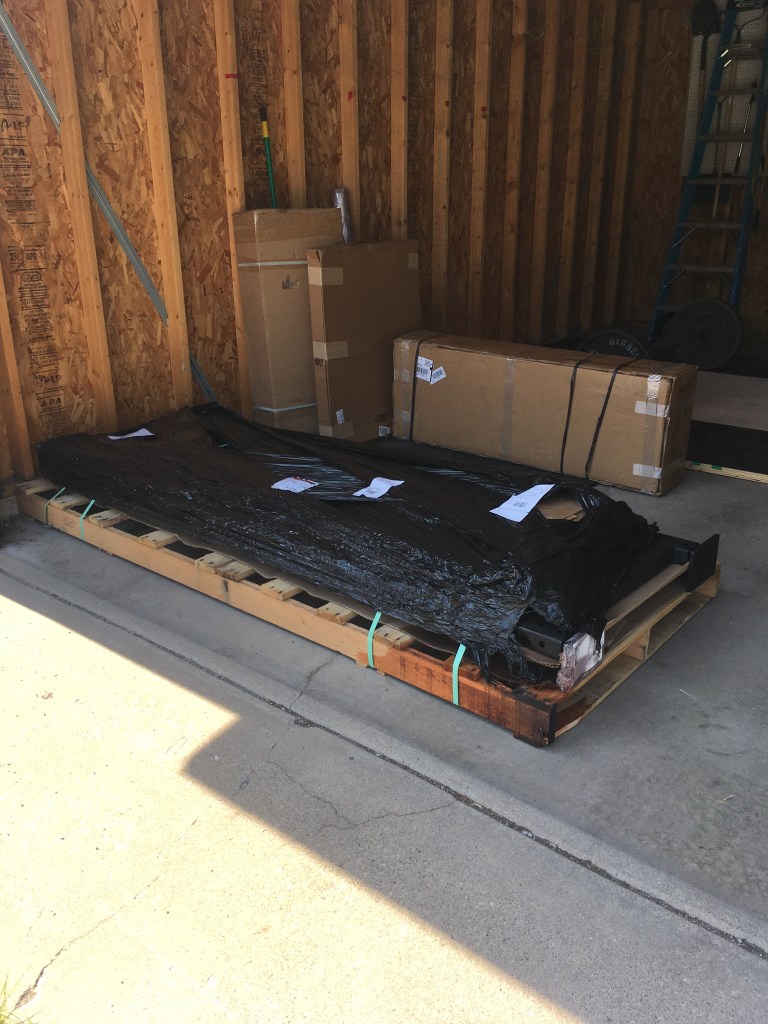
Well, it happened to be a brand spanking-new Rogue R-3 rack!1 I know last time I counseled raders to shop used to save some money, but with something as critical to a lifter’s safety as a power rack, I didn’t want to skimp or take the reisk I was buying a used and structurally compromised power rack.
I contemplated long and hard between the R-3 and the much larger R-4. Both are the same height–90″–and the smaller R-3 is actually a little wider–49″ versus 43″ for the R-4. But the R-4 is a lot deeper–43″ versus the R-3’s 24″, which really was what sealed the decision for me. I read online that the R-4 is deep enough that two people could squat in it, back to back, simultaneously, and that is just too big for my needs.
It winds up the R-3 was a great choice for the space, leaving plenty of room in front of it to deadlift or do olympic lifts.
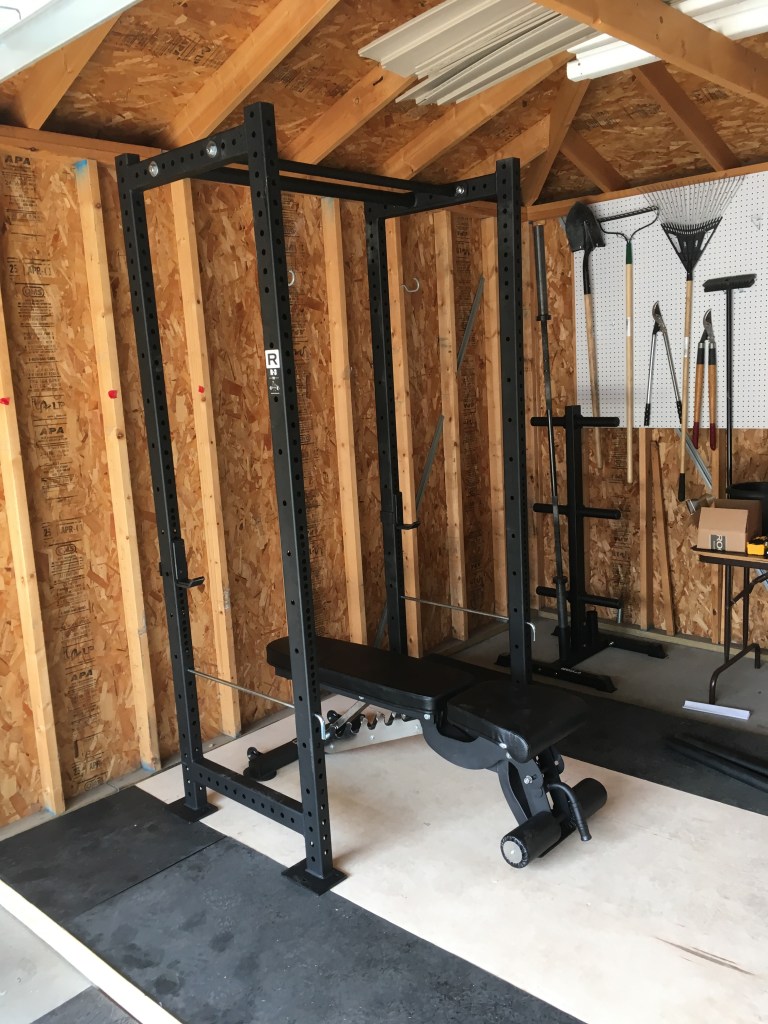
Setup was relatively simple–the rack comes in just a few huge pieces, and you basically just have to bolt the two pullup bars (one a “fat” bar, and the other a “skinny” bar) at the top to the two stanchions. But “simple” does not mean “easy” – the size and the weight of the stanchions made it rather unwieldy to assemble. But it came together fairly quickly, and the only tools I needed were a set of socket wrenches and a rubber mallet, which came in handy for banging the parts securely into place without damaging the finish.
Once it was assembled, I centered it and bolted it down to platform. The R-3 came with bolts for this purpose, so the only things I needed to secure it to the platform were a drill (to drill some pilot holes) and the aforementioned socket wrench.
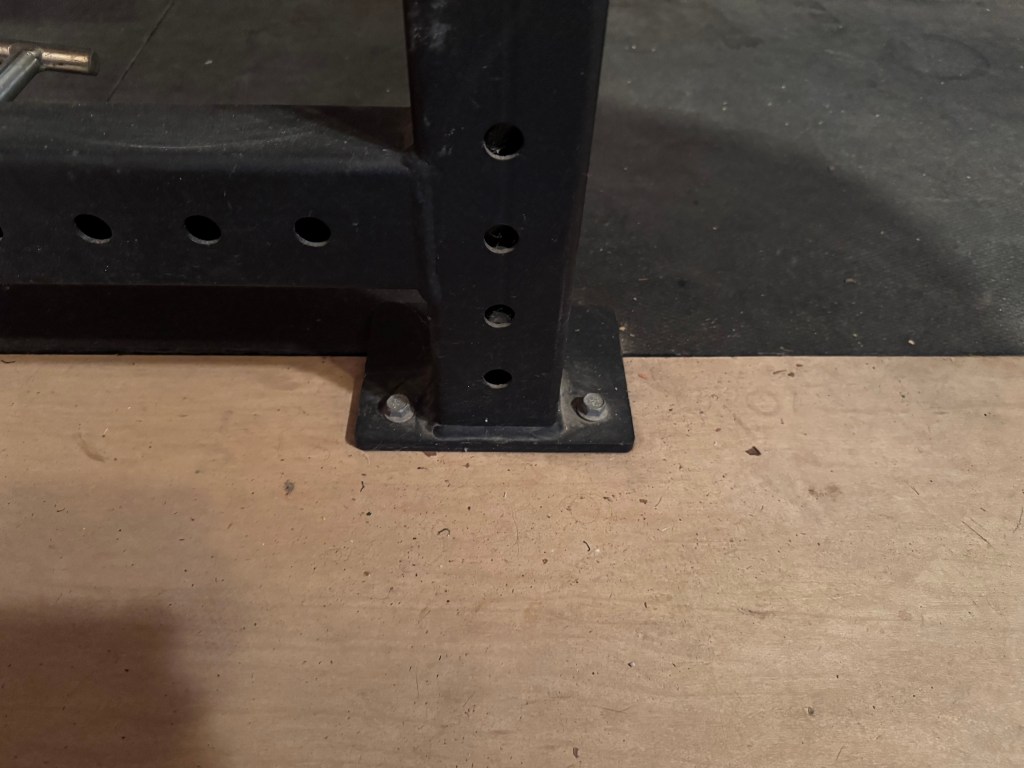
I mentioned safety before, and it comes with a set of adjustable pin and pipe safeties that can be adjusted to the lifter’s preference. The safeties can be set by plugging them through holes that have been placed in the so-called “Westside pattern”—1” through the bench & clean pull zone, 2” spacing above and below. This allows a lifter to “fail” a lift safely, which I have done many a time and come out unscathed. This is really key, because that has allowed me to really push myself in terms of both absolute weight, and in reps, without a spotter and without worrying about getting pinned under the bar.
I will say that sometimes it is tricky to get those safeties set correctly–getting them set straight, particularly in the narrowly-spaced holes in the bench zone, can be akin to threading a needle, particularly if you’re fatigued in the middle of a workout. To help with that, I’ve chalked initials on particular spots on the rack to help remember where I want the safeties set up.
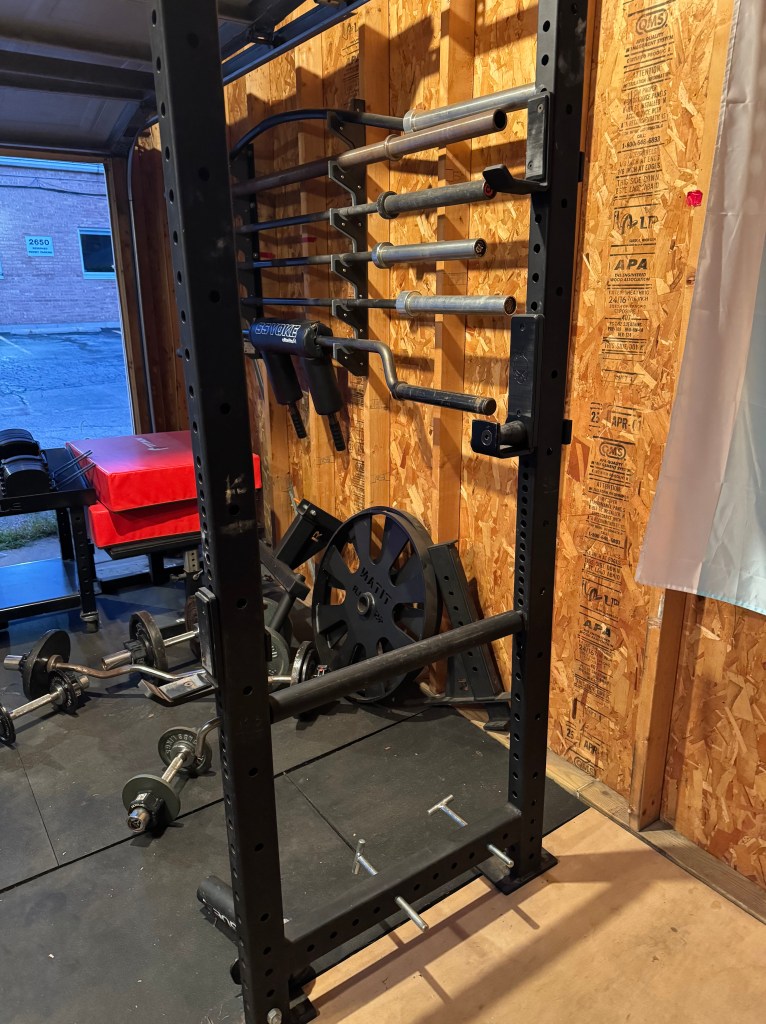
There are several other “add-on” safety products that Rogue sells. The first of these is the Infinity Strap System, which Rogue has discontinued. The Infinity Strap System is made of a strong nylon material that, to my recollection, was tested at around 10,000 pounds. These are particularly good for exercises that normally might mess up your barbell, like rack pulls or heavy shrugs. I have a video me using them for 385 pound rack pulls, and at the end of the video when I drop the bar, you can see that it sort of bounces back up, a testament to the strength of the straps.
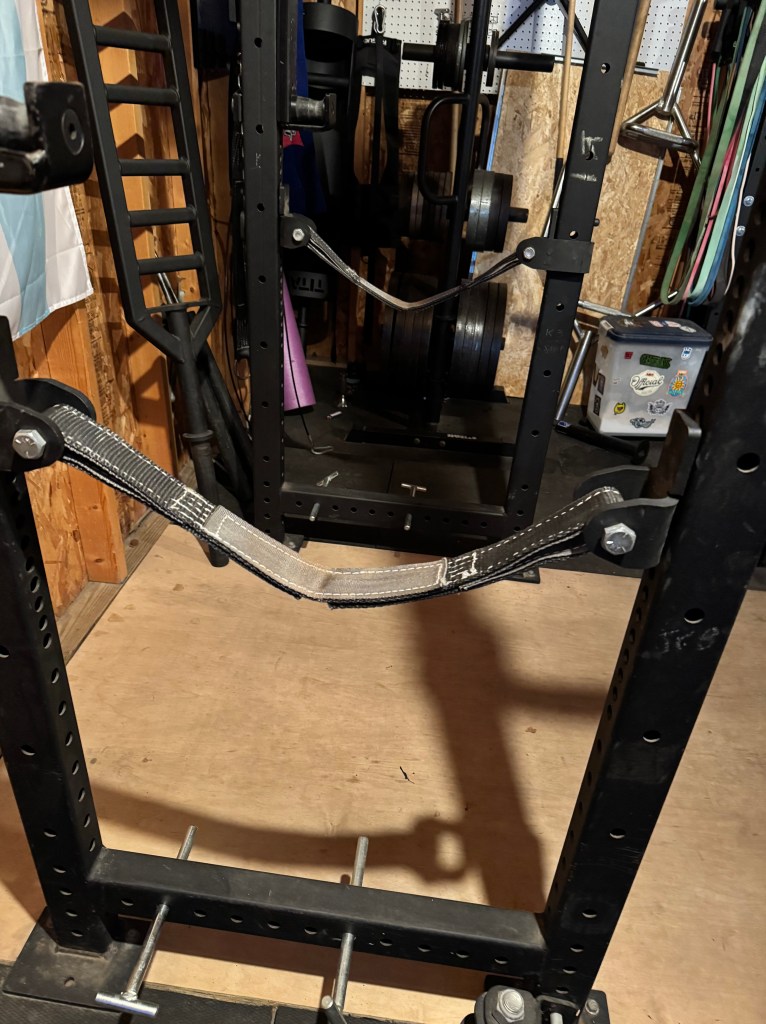
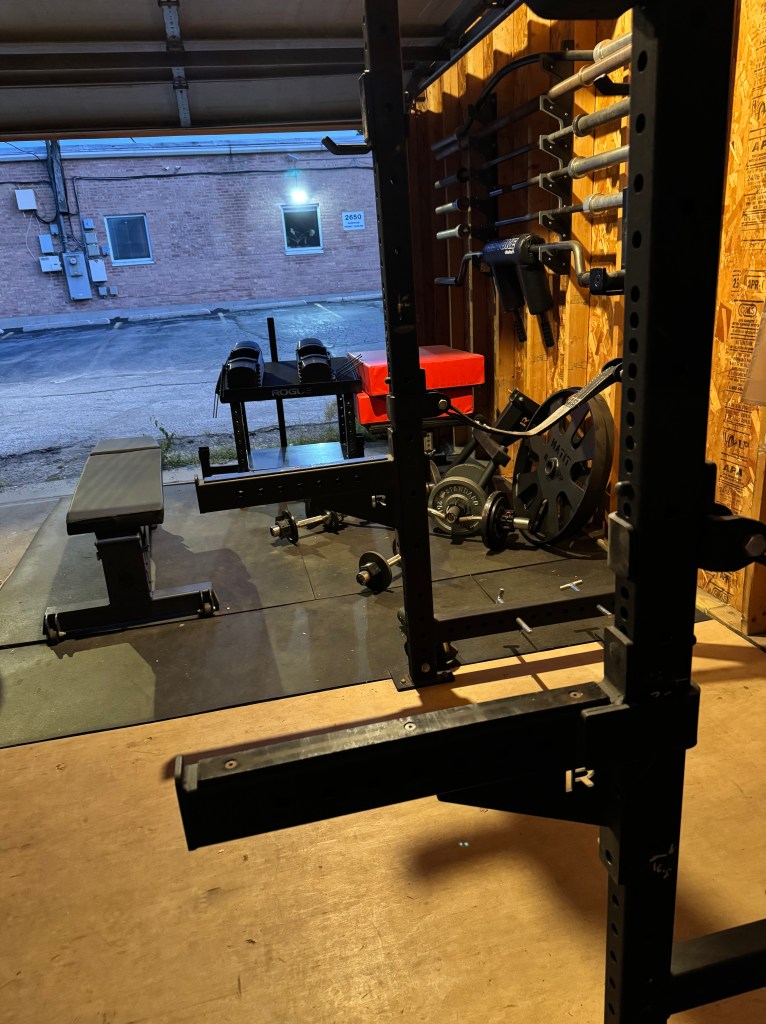
I also got some Infinity Spotter Arms that can be used at the front of the rack. Honestly I don’t use those very often–I’ll set them up if I’m using two different barbell movements and want to save time. So for example, if I have both barbell squats and then something like safety squat bar good mornings, I’ll have one barbell inside the rack and use the pipe or strap safeties for that one, then put the barbell on the outside of the rack and use the spotter arms.
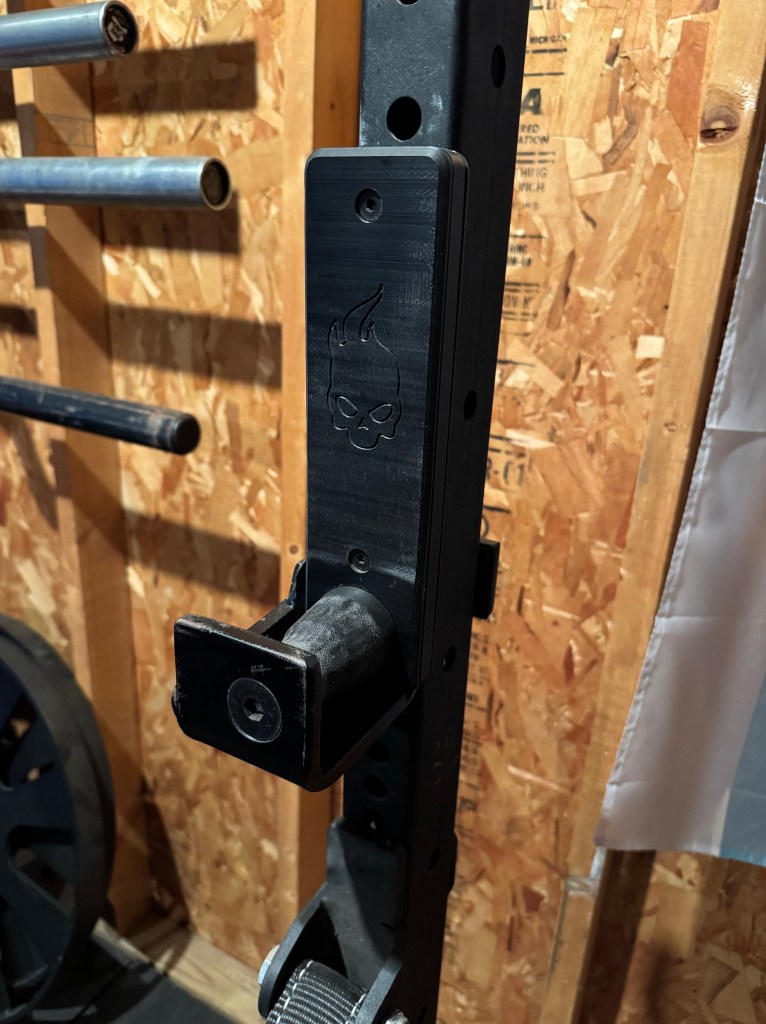
The Rogue R-3 also comes with one set of J-Hooks, but I do a lot of supersetting so it’s nice to have multiple J-Hooks. So I grabbed an extra pair from Rogue, and also my wife Kay got me these sweet Ghost-made roller J-Cups2 for my birthday one year, which are fantastic for getting a heavily-loaded bar centered.
In any event, I heartily recommend the Rogue R-3 for a half-garage. It’s a sturdy and space-efficient choice that has served me well over the last 7-plus years. It’s extremely versatile and Rogue offers a ton of accessories for it. But in the end I think all you need is what comes with the rack–all the other accessories I’ve bought over the years are certainly fun and useful, but far from necessary
NEXT TIME: HOW MANY BARBELLS COULD I POSSIBLY NEED?????
- RayDorl.com is not sponsored by anybody, including Rogue, in any way (which may be surprising to readers as I go through this series and their company comes up again and again)…. But hey, Rogue, if you have some promo cash to spare, hit me up. ↩︎
- Ghost was an independent weight training manufacturing company at the time. It has since been bought by Rogue. ↩︎
 RayDorl.com
Leave a comment